
The Trust Gap Between Executives and Frontline Workers: How AI Can Bridge the Divide
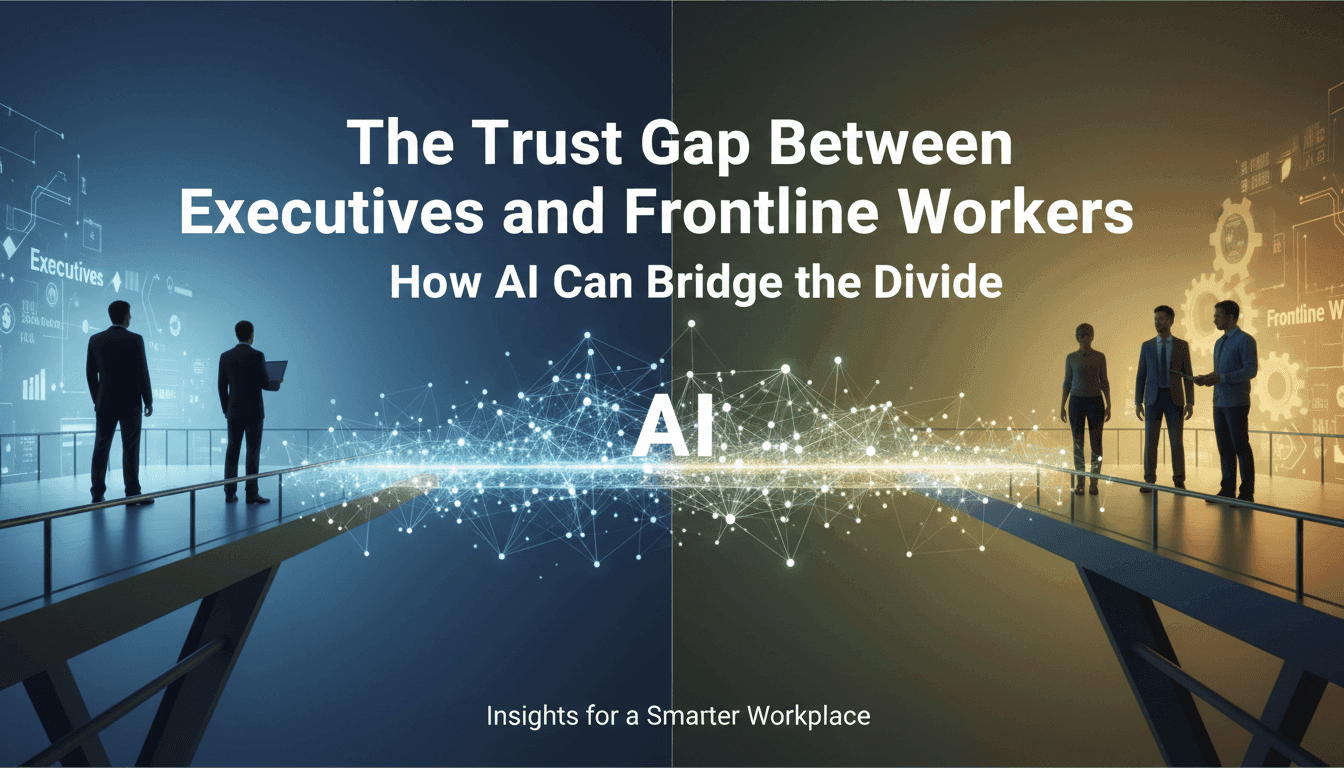
Table Of Contents
- Understanding the Trust Gap in Modern Organizations
- The Business Cost of Executive-Frontline Disconnect
- Root Causes of the Trust Deficit
- How AI Is Transforming Organizational Communication
- Practical Strategies to Close the Trust Gap
- Measuring Trust and Tracking Progress
- The Future of Executive-Employee Relationships
When executives announce quarterly results showing record profits while frontline workers struggle with understaffing and stagnant wages, a chasm opens. This isn't just an HR problem or a communication hiccup. It's a trust gap that's widening across industries, eroding productivity, accelerating turnover, and fundamentally threatening organizational resilience.
Recent studies reveal a startling reality: while 87% of executives believe their organizations communicate transparently, only 43% of frontline employees agree. This perception gap isn't merely academic. It translates into disengagement, resistance to change initiatives, and a workforce that views leadership decisions with skepticism rather than support. As companies race to implement digital transformation and AI solutions, this trust deficit becomes an even more critical barrier to success.
This article examines the trust gap between executives and frontline workers, explores its tangible business consequences, and reveals how forward-thinking organizations are leveraging AI and strategic communication frameworks to rebuild the foundation of organizational trust. Whether you're a C-suite leader seeking better employee engagement or a consultant helping organizations navigate transformation, understanding and addressing this gap has never been more essential.
The Trust Gap Crisis
How AI Can Bridge the Executive-Frontline Divide
💰 The Business Impact
🌉 How AI Bridges the Gap
Sentiment Analysis
Surfaces unfiltered workforce concerns at scale
Communication Tools
Optimizes messages for diverse audiences
Visibility Platforms
Gives leaders real-time operational insights
Predictive Analytics
Anticipates burnout and optimizes workload
⚡ 7 Practical Strategies
Town halls, listening tours, skip-level meetings
Share decision-making reasoning and constraints
Share productivity gains proportionally
Include frontline in AI implementation
Acknowledge mistakes and adjust visibly
Strengthen critical trust conduits
Create rotation and shadowing programs
Ready to Bridge the Gap?
Transform executive-employee relationships with AI-powered solutions and strategic frameworks
Join Business+AIUnderstanding the Trust Gap in Modern Organizations {#understanding-the-trust-gap}
The trust gap between executives and frontline workers represents a fundamental misalignment in how different organizational levels perceive reality, priorities, and the future direction of the company. This disconnect manifests in multiple dimensions: compensation fairness, workload distribution, recognition, communication transparency, and decision-making inclusion.
Frontline employees often feel invisible to leadership, their daily challenges unacknowledged, and their input undervalued. Meanwhile, executives operate with aggregate data and strategic imperatives that can feel disconnected from ground-level realities. This creates two parallel organizational narratives that rarely intersect meaningfully.
What makes this gap particularly damaging in today's business environment is the speed of change. Digital transformation, AI implementation, and market disruptions require unprecedented alignment between strategy and execution. When frontline workers don't trust executive intentions or capabilities, even well-designed initiatives face passive resistance or active sabotage. The gap becomes a friction point that slows every organizational movement.
The COVID-19 pandemic amplified this divide significantly. Essential workers who faced health risks while executives worked safely from home developed a heightened awareness of differential treatment. Remote work arrangements that benefited some employee categories but not others created new equity concerns. These experiences crystalized existing trust issues and created new ones that persist today.
The Business Cost of Executive-Frontline Disconnect {#business-cost-of-disconnect}
The trust gap carries measurable financial consequences that extend far beyond employee satisfaction scores. Organizations with low trust levels experience 74% higher stress-related employee turnover, according to organizational research. When you calculate recruitment costs, training investments, and productivity losses during transitions, this turnover represents millions in unnecessary expenditure for mid-sized companies.
Disengagement is another costly symptom. Employees who distrust leadership deliver minimum viable performance rather than discretionary effort. They're less likely to suggest process improvements, identify cost savings, or go beyond their job descriptions during critical moments. This passive disengagement creates a productivity tax that compounds over time, reducing organizational competitiveness in ways that rarely appear on balance sheets.
Innovation suffers dramatically in low-trust environments. Frontline workers possess intimate knowledge of customer pain points, operational inefficiencies, and market opportunities, but they won't share insights with leaders they don't trust. This intelligence gap means executives make strategic decisions with incomplete information, while valuable innovations remain trapped in the minds of skeptical employees.
Customer experience deteriorates as well. Frontline workers who feel undervalued by leadership often transfer that emotional state to customer interactions. The disconnect between executive vision for customer service excellence and actual customer experiences widens, damaging brand reputation and customer loyalty in markets where differentiation increasingly depends on service quality.
Root Causes of the Trust Deficit {#root-causes}
Several systemic factors drive the trust gap, many rooted in traditional organizational structures that create distance between executives and frontline realities. Understanding these causes is essential for developing effective solutions.
Communication asymmetry represents perhaps the most fundamental driver. Executives receive filtered information through management layers, each level removing context and softening bad news. Meanwhile, frontline workers receive executive communications that feel generic, disconnected from their specific challenges, and often contradict their lived experiences. This two-way filtering creates mutual misunderstanding that masquerades as willful ignorance.
Compensation disparities have reached levels that strain credibility. When CEO compensation packages run 300-400 times the median worker salary, messages about shared sacrifice during difficult times ring hollow. Frontline workers increasingly view executives as extracting value rather than creating it, especially when productivity gains translate into executive bonuses rather than wage increases or improved working conditions.
Decision-making exclusion reinforces feelings of powerlessness. Strategic decisions that dramatically affect frontline work often happen without input from those who'll implement them. When these decisions prove impractical or counterproductive, there's no feedback mechanism that genuinely influences executive thinking. Workers learn that their expertise doesn't matter to leadership, breeding cynicism and disengagement.
Recognition gaps create emotional distance. Executives celebrate strategic wins and shareholder value creation while frontline achievements go unnoticed beyond immediate supervisors. This selective attention signals whose contributions matter most, creating a hierarchy of value that undermines organizational unity.
Technology implementation approaches frequently worsen trust issues. When new systems and AI tools are deployed without adequate training, input, or consideration for how they affect daily work, employees view them as surveillance or replacement threats rather than supportive tools. The potential of AI workshops and inclusive implementation processes is often overlooked in favor of top-down rollouts.
How AI Is Transforming Organizational Communication {#ai-transforming-communication}
Artificial intelligence, ironically, offers powerful solutions to the very trust gaps that poorly implemented technology can create. When deployed thoughtfully, AI tools can bridge communication distances, surface frontline insights, and create transparency that rebuilds organizational trust.
Sentiment analysis platforms now process employee feedback at scale, identifying patterns and concerns that might never reach executive attention through traditional channels. These tools analyze survey responses, internal communication platforms, and even meeting transcripts to provide leadership with unfiltered understanding of workforce sentiment. Unlike human-filtered reports, AI surfaces uncomfortable truths that executives need to hear.
Communication optimization tools help executives craft messages that resonate with diverse audiences. AI analysis can predict how different employee segments will interpret various messaging approaches, allowing leaders to communicate more effectively across organizational levels. This doesn't mean manipulating messages but rather ensuring intended meanings actually reach audiences as intended.
Operational visibility platforms give executives real-time insights into frontline realities without creating surveillance atmospheres. When implemented transparently, these systems help leadership understand workflow bottlenecks, resource constraints, and operational challenges that don't surface in aggregate reports. This visibility enables more informed decision-making that accounts for ground-level realities.
Predictive analytics for workforce planning can demonstrate executive commitment to employee welfare by anticipating staffing needs, identifying burnout risks, and optimizing schedules more fairly. When workers see AI used to improve their conditions rather than just maximize productivity, it signals leadership priorities that build rather than erode trust.
Organizations exploring these possibilities benefit from structured guidance. AI masterclasses specifically focused on people and organizational performance help leadership teams implement trust-building technologies effectively rather than deploying tools that backfire.
Practical Strategies to Close the Trust Gap {#practical-strategies}
Closing trust gaps requires sustained effort across multiple organizational dimensions. No single initiative rebuilds trust, but coordinated strategies create momentum that gradually shifts organizational culture.
1. Create Genuine Dialogue Mechanisms
Establish regular, structured opportunities for executives to hear directly from frontline workers without management filters. Town halls where employees can ask unscripted questions, listening tours where executives spend time in operational roles, and skip-level meetings all create connection points. The key is making these genuine exchanges rather than staged performances, with visible follow-through on concerns raised.
2. Increase Transparency Around Decision-Making
Share the reasoning behind strategic decisions, including the constraints and tradeoffs executives face. When workers understand why certain paths were chosen over alternatives they preferred, even disagreement doesn't necessarily damage trust. Transparency about what leadership doesn't know is particularly powerful, as it demonstrates authenticity rather than omniscient posturing.
3. Align Incentives Across Organizational Levels
Restructure compensation and recognition systems so success is genuinely shared. When frontline workers see productivity improvements or cost savings translate into their own rewards rather than exclusively executive bonuses, it rebuilds belief in collective purpose. This doesn't require identical compensation but does require proportional sharing of gains and pains.
4. Involve Frontline Workers in Technology Decisions
Before implementing AI tools or digital systems that affect daily work, involve representative frontline employees in selection and design processes. Their practical insights improve implementation success while their participation signals respect for their expertise. AI consulting services that incorporate multi-level stakeholder engagement create better outcomes than purely top-down approaches.
5. Demonstrate Accountability for Leadership Failures
When executive decisions prove mistaken, acknowledge errors openly and adjust course visibly. Nothing rebuilds trust faster than leaders who admit mistakes and demonstrate learning. Conversely, nothing reinforces cynicism more than executives who never accept responsibility for negative outcomes while claiming credit for positive ones.
6. Invest in Middle Management Development
Middle managers serve as critical trust conduits or trust barriers between executives and frontline workers. Developing their communication skills, emotional intelligence, and authentic leadership capabilities amplifies every other trust-building initiative. Neglecting this layer undermines even the best executive intentions.
7. Build Cross-Functional Understanding
Create rotation programs, shadowing opportunities, and cross-functional projects that help executives maintain connection with operational realities while giving frontline workers visibility into strategic challenges. This mutual understanding reduces the perception gaps that fuel mistrust.
Measuring Trust and Tracking Progress {#measuring-trust}
What gets measured gets managed, and trust is no exception. Organizations serious about closing trust gaps need robust measurement frameworks that go beyond annual engagement surveys.
Trust-specific metrics should include perceptual measures (do employees trust leadership intentions, competence, and consistency?), behavioral indicators (do workers voice concerns, volunteer for initiatives, recommend the organization?), and outcome measures (turnover rates, grievance filings, safety incident reporting). Tracking these metrics across organizational levels and demographic segments reveals where trust gaps are widest.
Pulse surveys conducted quarterly or monthly provide trend data that annual surveys miss. Short, focused questions about specific trust dimensions allow organizations to see whether initiatives are moving indicators or simply creating activity without impact. The key is ensuring anonymity and demonstrating that feedback influences decisions, not just generates reports.
Qualitative feedback mechanisms complement quantitative metrics by capturing the nuances behind numbers. Regular focus groups, exit interview analysis, and narrative survey responses reveal why trust exists or doesn't, informing more targeted interventions. AI-powered text analysis can identify themes across thousands of responses, making qualitative research scalable.
External benchmarking provides context for internal metrics. Understanding how your organization's trust levels compare to industry peers or best-in-class employers helps assess whether you're experiencing normal challenges or facing crisis-level deficits requiring urgent intervention.
The Business+AI forums offer valuable opportunities to explore how other organizations approach trust measurement and exchange insights about which metrics prove most actionable across different industries and contexts.
The Future of Executive-Employee Relationships {#future-relationships}
The nature of work is evolving in ways that will either close or catastrophically widen trust gaps. Remote and hybrid work arrangements reduce casual executive-employee interactions that historically built familiarity and connection. AI automation raises questions about job security that executives must address transparently to maintain trust.
Organizations that thrive in this environment will embrace radically different leadership models. Hierarchical distance will give way to networked leadership where executives function as enablers and resources rather than commanders. Transparency will become default rather than exception, with employees expecting visibility into organizational operations that previous generations never questioned.
AI will play paradoxical roles. Poorly implemented, it will deepen divides by creating surveillance anxieties and displacement fears. Thoughtfully deployed, it will enable the personalized communication, operational transparency, and inclusive decision-making that rebuilds trust at scale. The difference lies in whether organizations view AI as a tool for controlling workers or empowering them.
Generational shifts will accelerate change. Younger workers enter organizations with fundamentally different expectations about transparency, purpose, and participation in decision-making. They're less willing to accept trust deficits as inevitable organizational features and more willing to leave when they encounter them. This generational pressure will force leadership evolution regardless of whether current executives embrace it willingly.
The competitive advantage will increasingly flow to organizations that solve this challenge. In tight labor markets, companies known for genuine trust between leadership and workers will attract and retain top talent. In innovation-dependent industries, organizations that successfully harness frontline insights through trust-based communication will out-innovate competitors with brilliant but disconnected leadership.
The trust gap between executives and frontline workers represents one of the most significant organizational challenges of our era, carrying costs that extend from employee engagement through innovation capacity to customer experience and competitive positioning. This divide isn't an inevitable feature of organizational life but rather a solvable problem requiring sustained attention, structural changes, and genuine leadership commitment.
AI and digital transformation offer powerful tools for bridging this gap, but only when implemented with inclusive approaches that demonstrate respect for frontline expertise and priorities. Technology alone won't rebuild trust. It must be combined with authentic dialogue, aligned incentives, transparent decision-making, and accountability that flows both up and down organizational hierarchies.
The organizations that successfully close this gap won't just see improved engagement scores. They'll unlock the full potential of their workforce, accelerate innovation, enhance customer experiences, and build resilience that carries them through disruption. In an era where competitive advantage increasingly depends on organizational agility and collective intelligence, trust between leadership and workers becomes not just a nice-to-have cultural feature but a fundamental strategic asset.
The question isn't whether this gap matters. It's whether your organization will address it proactively or allow it to quietly erode your competitive position until crisis forces uncomfortable changes.
Ready to Bridge the Trust Gap in Your Organization?
Transforming executive-employee relationships requires more than good intentions. It demands strategic frameworks, proven methodologies, and expert guidance tailored to your specific organizational context.
Join Business+AI's membership program to access exclusive resources on using AI and digital transformation to build organizational trust, connect with executives facing similar challenges, and gain practical strategies for closing the trust gap in your organization. Turn insights into action with expert-led guidance designed for Singapore's business environment and beyond.