
The Gender AI Trust Gap: Why Women Are More Skeptical of Artificial Intelligence
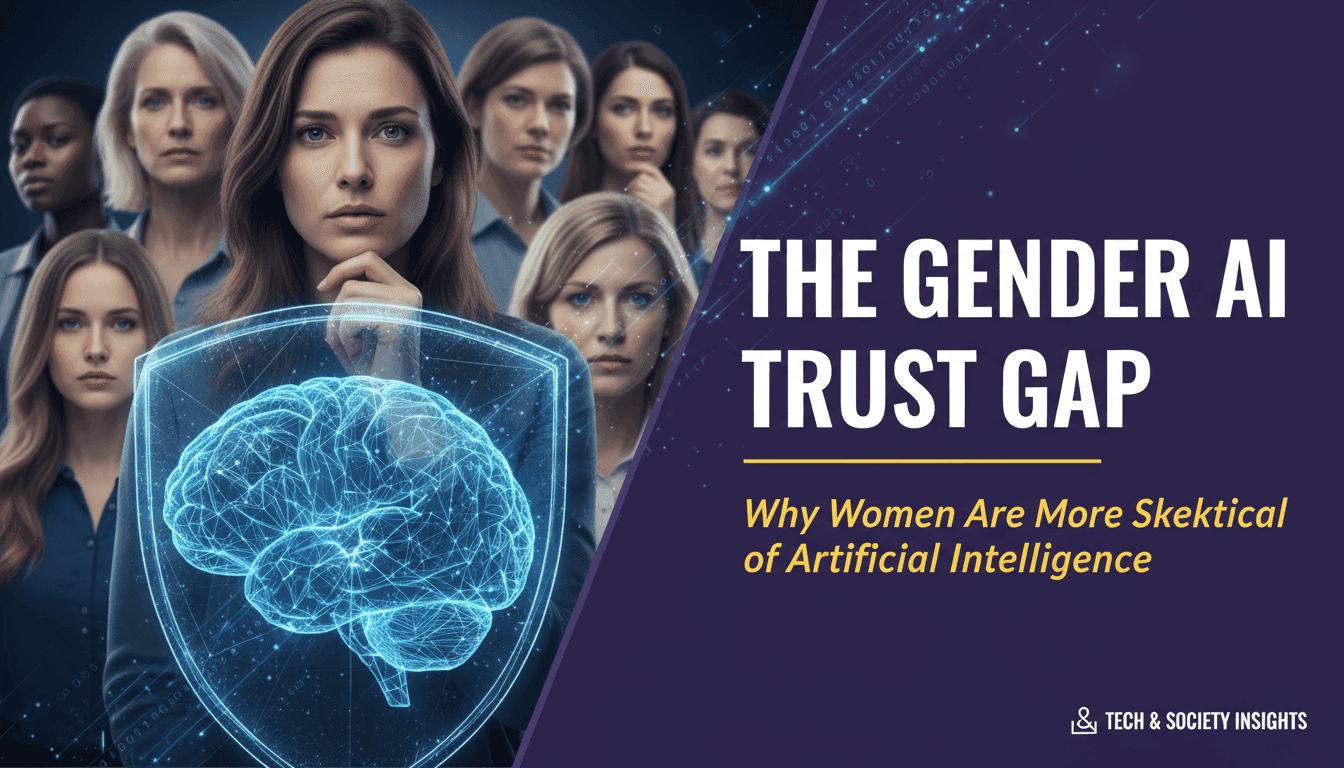
Table Of Contents
- Understanding the Gender AI Trust Gap
- The Numbers Behind Female AI Skepticism
- Why Women Are More Cautious About AI
- Real-World Consequences of the Trust Gap
- Industry-Specific Manifestations
- Bridging the Gender AI Trust Gap
- Building Inclusive AI Strategies for Your Organization
When a major healthcare provider introduced an AI-powered diagnostic tool in 2023, something unexpected happened. While male physicians adopted the system at rates exceeding 70%, only 52% of female physicians integrated it into their practice. The technology was identical, the training was the same, yet the trust levels diverged sharply along gender lines.
This scenario isn't an isolated incident. It's a pattern emerging across industries, geographies, and AI applications. Research consistently shows that women express significantly lower trust in artificial intelligence systems compared to men, creating what experts now call the gender AI trust gap. This divide isn't just a theoretical concern or a demographic curiosity. It has profound implications for how organizations implement AI, who benefits from technological advancement, and whether AI systems can achieve their promised potential.
For business leaders navigating AI transformation, understanding this trust gap is essential. When half your workforce, customer base, or stakeholder group approaches your AI initiatives with heightened skepticism, your implementation strategy needs to account for these differences. This article examines why women are more cautious about AI, what drives this skepticism, and how forward-thinking organizations can build AI strategies that earn trust across all demographics.
The Gender AI Trust Gap
Why women are more skeptical of artificial intelligence—and what it means for your business
The Numbers Tell the Story
Why the Gap Exists
Historical Bias in AI Systems
From Amazon's resume screening to facial recognition errors, AI systems have repeatedly demonstrated gender bias in real-world applications.
Underrepresentation in AI Development
Only 22% of AI professionals are women, resulting in systems that reflect a narrow set of perspectives and priorities.
Different Risk Assessment Patterns
Women tend to weight potential downsides more heavily, asking critical questions about accountability and fairness.
Industry-Specific Impact
Building Trust: What Organizations Must Do
Transparency
Make AI decision-making explainable and accessible
Diverse Teams
Include women throughout the AI development lifecycle
Accountability
Establish clear processes for challenging AI decisions
Testing
Conduct gender-disaggregated impact assessments
The Bottom Line
AI systems that only work well for or are only trusted by half your stakeholders deliver half the value. Building inclusive AI isn't just ethically correct—it's strategically essential for realizing AI's full business potential.
Understanding the Gender AI Trust Gap
The gender AI trust gap refers to the measurable difference in confidence, acceptance, and willingness to engage with artificial intelligence systems between men and women. This isn't about technological literacy or capability. Women in technology roles often show the same skepticism as those in other fields, suggesting the issue runs deeper than familiarity with digital systems.
What makes this gap particularly significant is its consistency. Across different countries, age groups, and professional backgrounds, women consistently report lower confidence in AI decision-making, greater concern about AI risks, and more hesitation to delegate important tasks to automated systems. This pattern holds true whether we're discussing AI in hiring, healthcare, financial services, or consumer applications.
The gap also appears to be widening rather than narrowing. As AI becomes more prevalent and its limitations more visible, women's skepticism is being validated by real-world examples of bias and failure. Each incident of an AI system demonstrating gender bias reinforces the cautious stance many women have already adopted.
The Numbers Behind Female AI Skepticism
Quantifying the trust gap helps us understand its scope and significance. Recent studies paint a clear picture of divergent attitudes toward AI along gender lines.
Pew Research Center data shows that women are 13% less likely than men to believe AI will have a positive impact on society. When asked about specific AI applications, the gap widens further. In healthcare AI, women express 15% lower trust in AI diagnostic recommendations compared to male counterparts. In financial services, women are 18% less likely to trust AI-driven investment advice.
The World Economic Forum's Global Gender Gap Report highlights that women comprise only 22% of AI professionals globally, yet they represent the majority of workers in industries most likely to be disrupted by AI automation. This creates a dynamic where women are simultaneously underrepresented in creating AI systems and overrepresented in facing their consequences.
Perhaps most telling is the adoption gap. When given the choice to use AI-powered features versus traditional methods, women opt for traditional approaches at rates 8-12% higher than men across various applications. This translates directly to business outcomes, affecting everything from product adoption rates to training program effectiveness.
Why Women Are More Cautious About AI
The gender AI trust gap doesn't emerge from nowhere. It's rooted in legitimate concerns backed by evidence, historical patterns, and lived experiences. Understanding these drivers is essential for anyone seeking to implement AI systems that achieve broad acceptance.
Historical Bias in AI Systems
Women's skepticism about AI isn't unfounded paranoia. It's a rational response to documented patterns of algorithmic bias. AI systems have repeatedly demonstrated gender bias in consequential applications, from resume screening tools that downgrade female candidates to credit algorithms that offer women lower limits than men with identical financial profiles.
Consider Amazon's recruiting algorithm, discontinued after it was found to penalize resumes containing the word "women's" and downgrade graduates from all-women's colleges. Or facial recognition systems that show error rates up to 35% higher for women, particularly women of color, compared to white men. These aren't theoretical risks. They're actual systems that were deployed, affected real people, and were only caught because someone was paying attention.
When women encounter these stories, they recognize themselves as potential victims of similar bias. This recognition breeds caution. If you've seen AI systems consistently disadvantage people who look like you, trusting the next AI system requires a leap of faith that logic doesn't support.
Underrepresentation in AI Development
The AI field has a diversity problem that directly impacts trust. When only 22% of AI researchers and 15% of machine learning engineers are women, the systems being built reflect a narrow set of perspectives and priorities.
This underrepresentation manifests in multiple ways. Training datasets often contain gender imbalances that encode stereotypes into algorithms. Use cases prioritize problems identified by male product managers. Testing protocols may overlook scenarios that disproportionately affect women. The result is AI systems that work better for men because they were primarily designed by men, for problems men identified, using data that better represents male experiences.
Women in technical roles frequently report being excluded from AI development discussions or having their concerns about bias dismissed as edge cases. This lived experience of being overlooked during AI creation naturally translates to skepticism about AI outputs. If your perspective wasn't considered during development, why would you trust the result?
Different Risk Assessment Patterns
Research in behavioral psychology and decision science reveals that men and women often assess technological risks differently. Women tend to weight potential downsides more heavily, particularly when those downsides involve privacy, data security, or systems making consequential decisions about people's lives.
This isn't about women being more fearful. It's about different risk calculus. Studies show women are more likely to ask questions like "What happens if this goes wrong?" and "Who is accountable when AI makes a mistake?" These are exactly the questions organizations should be asking, but they're often dismissed as excessive caution rather than recognized as appropriate due diligence.
Women also report greater concern about AI surveillance capabilities, data collection practices, and the potential for AI to be weaponized for harassment or discrimination. Given that women experience online harassment at rates significantly higher than men, this heightened concern about AI-enabled surveillance or targeting is entirely rational.
Real-World Consequences of the Trust Gap
The gender AI trust gap isn't just an academic observation. It creates tangible business challenges and missed opportunities that organizations must address.
When women show lower adoption rates for AI-powered features, product developers face skewed usage data that can create feedback loops. If female users avoid AI features, those features receive less training data from women, potentially making them work even worse for female users, which further suppresses adoption. This cycle can embed gender disparities directly into product performance.
For organizations implementing AI tools internally, the trust gap affects training effectiveness and workflow integration. Business+AI workshops frequently encounter situations where female employees require more extensive explanation of AI decision-making processes and more robust accountability mechanisms before accepting AI tools into their workflow. Without addressing these concerns, AI initiatives achieve partial adoption that undermines their value proposition.
The trust gap also affects hiring and retention in AI-intensive organizations. Women considering roles that involve working alongside AI systems express greater concern about job security, algorithmic management, and having their work evaluated by opaque systems. This can make talent acquisition more challenging and limit the diversity of teams implementing AI strategies.
Industry-Specific Manifestations
The gender AI trust gap plays out differently across industries, shaped by sector-specific factors and the particular ways AI is being deployed.
In healthcare, where AI diagnostic tools and treatment recommendation systems are proliferating, women patients express particular concern about AI systems trained primarily on male medical data. Historical medical research has often excluded women or failed to account for gender differences in symptoms and treatment responses. Women worry that AI trained on this biased historical data will perpetuate these gaps in digital form.
Financial services face trust challenges around AI credit decisioning and investment advice. Women who have experienced traditional financial discrimination wonder whether AI systems eliminate bias or simply automate it. The opacity of many AI financial models exacerbates this concern, making it impossible for women to understand why they received a particular credit decision or investment recommendation.
In recruitment and HR, the trust gap affects both candidates and hiring managers. Female job seekers express skepticism about AI resume screening, worried that algorithms might encode historical hiring biases. Female hiring managers, meanwhile, are more likely to question AI candidate recommendations and less likely to rely on them without human verification.
Consumer technology sees the trust gap in voice assistants, recommendation algorithms, and personalization features. Women report greater discomfort with data collection practices that power these systems and more concern about privacy implications. This affects adoption rates for smart home devices, personalized shopping features, and AI-powered personal assistants.
Bridging the Gender AI Trust Gap
Addressing the gender AI trust gap requires more than cosmetic changes. It demands fundamental shifts in how organizations approach AI development, deployment, and governance.
Transparency must become non-negotiable. Women consistently cite explainability as a key factor in AI trust. Black-box algorithms that produce recommendations without explanation generate skepticism. Organizations need to invest in interpretable AI models and create clear documentation of how systems make decisions, what data they use, and what their limitations are.
Diverse development teams aren't optional. Including women throughout the AI development lifecycle, from problem definition through testing and deployment, directly impacts whether systems earn trust from female users. This isn't about tokenism. It requires genuine inclusion where women's concerns are heard and addressed rather than dismissed.
Accountability mechanisms matter tremendously. Women want to know what happens when AI makes mistakes and who is responsible for fixing them. Organizations should establish clear processes for challenging AI decisions, reporting problematic outputs, and seeking human review. Making these mechanisms visible and accessible builds confidence that concerns will be taken seriously.
Testing protocols must explicitly examine gender impacts. Before deploying AI systems, organizations should conduct gender-disaggregated testing that specifically looks for differential performance or bias. This testing should go beyond simple accuracy metrics to examine whether systems produce equitable outcomes across gender groups.
The Business+AI consulting services team regularly helps organizations conduct these gender-impact assessments, identifying potential trust barriers before they undermine adoption.
Building Inclusive AI Strategies for Your Organization
For business leaders seeking to implement AI in ways that earn trust across all demographic groups, several strategic approaches have proven effective.
Start with stakeholder engagement. Before deploying AI systems, conduct listening sessions specifically with female employees, customers, or users. Ask directly about concerns, what would build trust, and what would represent dealbreakers. Use these insights to shape implementation approaches rather than treating them as obstacles to overcome.
Invest in AI literacy programs that address different comfort levels and concerns. Women often report wanting deeper understanding of AI limitations and failure modes, not just capabilities. Training programs should make space for skeptical questions and provide substantive answers about accountability and oversight.
Create feedback loops that allow users to report when AI systems aren't working well for them. Make these feedback mechanisms prominent and demonstrate responsiveness by actually adjusting systems based on input. Nothing builds trust like seeing your concerns taken seriously and acted upon.
Document your AI ethics approach and make it public. Women want to see evidence that organizations have thought seriously about bias, fairness, and accountability before deploying AI. Written AI ethics policies, diverse AI ethics boards, and public reporting on AI system performance all contribute to trust-building.
The Business+AI masterclass programs provide hands-on training in implementing these inclusive AI strategies, helping leaders move from awareness to action.
Champion female AI leaders visibly. When women see other women in leadership roles overseeing AI initiatives, it signals that diverse perspectives are valued and that concerns will be understood. This representation matters not as symbolism but as substantive evidence that the organization takes inclusion seriously.
Measure trust as an outcome metric. Organizations should track AI adoption rates, trust levels, and satisfaction scores disaggregated by gender. If gaps emerge, treat them as system failures requiring intervention, not user problems requiring education. This accountability ensures that trust-building remains a priority rather than an afterthought.
Organizations serious about turning AI talk into tangible business gains, as emphasized at the annual Business+AI Forum, recognize that trust is foundational. AI systems that only work well for or are only trusted by half your stakeholders deliver half the value. Building inclusive AI isn't just ethically correct. It's strategically essential for realizing AI's full business potential.
The gender AI trust gap represents both a challenge and an opportunity for organizations implementing artificial intelligence. Women's skepticism isn't irrational resistance to progress. It's an informed response to documented patterns of bias, underrepresentation in AI development, and legitimate concerns about accountability and fairness.
For business leaders, this reality demands a more thoughtful approach to AI implementation. Success requires moving beyond technically sophisticated systems to trustworthy systems that work equitably for all users. This means prioritizing transparency, ensuring diverse development teams, establishing clear accountability mechanisms, and genuinely engaging with concerns rather than dismissing them.
The organizations that successfully bridge the gender AI trust gap won't just achieve higher adoption rates. They'll build better AI systems, period. Women's heightened scrutiny pushes organizations to address questions about bias, accountability, and fairness that benefit everyone. The skepticism that seems like a barrier is actually a valuable signal pointing toward more robust, equitable, and ultimately more effective AI implementations.
As AI becomes increasingly central to business operations, the question isn't whether to address the gender trust gap. It's whether you'll address it proactively, building inclusive systems from the start, or reactively, after failed implementations and missed opportunities make the cost of exclusion undeniable.
Ready to Build AI Strategies That Earn Trust?
Developing inclusive AI implementations requires expertise, diverse perspectives, and proven frameworks. Business+AI membership connects you with executives, consultants, and solution vendors who are successfully navigating these challenges. Gain access to hands-on workshops, expert masterclasses, and a community committed to turning AI potential into measurable business results that work for everyone.