
Generational AI Trust Gap: Why Gen Z Scores 28 While Boomers Score 10 and What It Means for Business
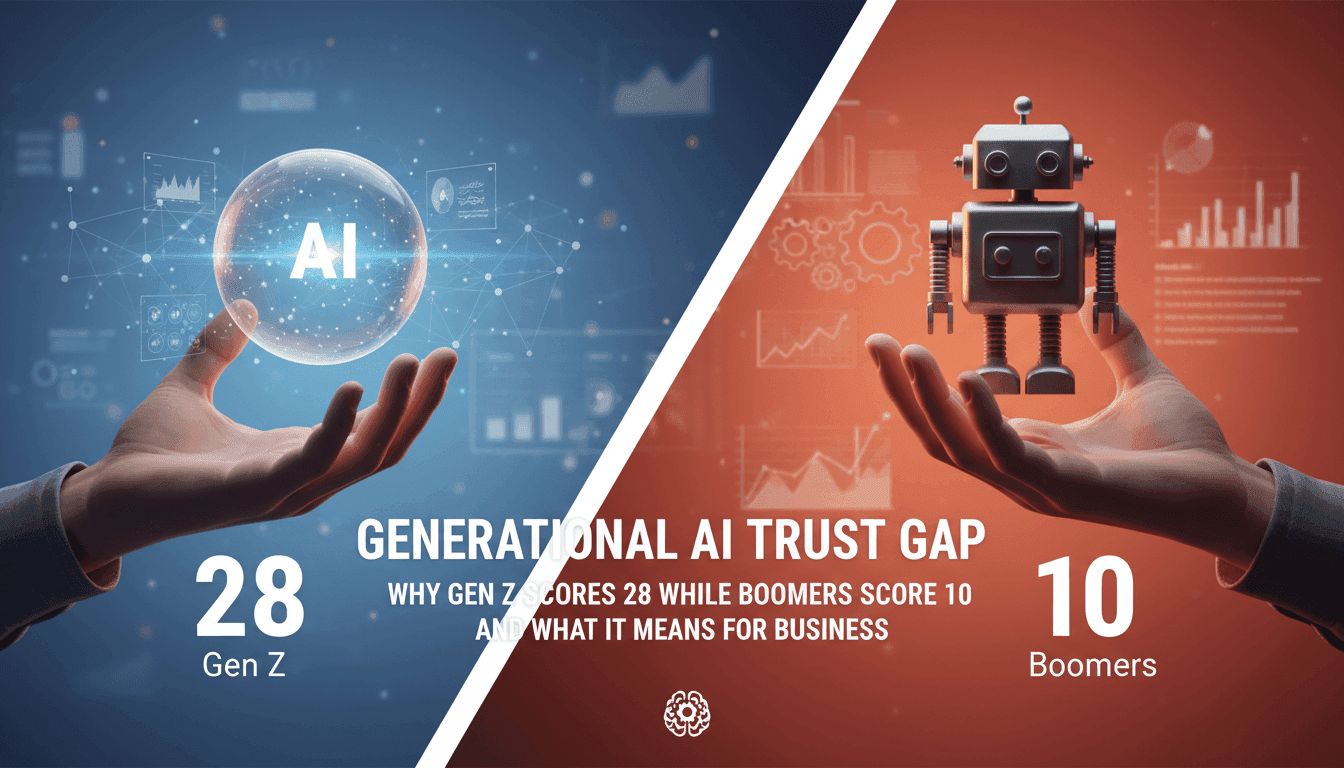
Table Of Contents
- Understanding the AI Trust Divide
- Why Gen Z Embraces AI Technology
- The Roots of Boomer AI Skepticism
- Business Implications of the Trust Gap
- Bridging the Generational AI Divide
- Creating an AI-Ready Multi-Generational Workforce
- The Future of Generational AI Adoption
The numbers tell a stark story: Gen Z's AI trust score sits at 28 while Baby Boomers register a mere 10 on the same scale. This nearly three-fold difference isn't just a statistical curiosity; it represents a fundamental shift in how different generations perceive, interact with, and leverage artificial intelligence in both personal and professional contexts. For business leaders navigating an increasingly AI-driven landscape, this generational trust gap presents both significant challenges and untapped opportunities.
This divide affects everything from technology adoption rates and workplace collaboration to customer engagement strategies and long-term digital transformation initiatives. Companies that understand the nuances behind these trust scores can develop more effective AI implementation strategies, build stronger multi-generational teams, and create competitive advantages in their markets. Meanwhile, organizations that ignore these generational differences risk alienating valuable talent, missing innovation opportunities, and falling behind in the AI revolution that's reshaping every industry.
The Generational AI Trust Gap
Understanding the divide shaping workplace AI adoption
Why This Gap Matters for Business
Workplace Friction
Different comfort levels create challenges in AI tool adoption and multi-generational collaboration
Talent Retention
Gen Z evaluates employers on AI sophistication while experienced workers may resist rapid changes
Customer Strategy
Age-based trust differences require tailored approaches for AI-powered customer experiences
Bridging the Divide: 4 Key Strategies
Reverse Mentoring
Pair tech-savvy younger staff with experienced seniors
Transparency Initiatives
Clearly explain AI systems, data usage, and privacy safeguards
Phased Implementation
Allow different comfort levels during AI adoption transitions
Tailored Training
Meet employees where they are with generation-appropriate programs
The Root Causes
- Never known a world without AI
- Witnessed practical AI benefits firsthand
- View AI literacy as career capital
- Comfortable with rapid tech evolution
- Witnessed automation job displacement
- Deep privacy and security concerns
- Troubled by AI's black-box decisions
- Value transparency and accountability
Turn Generational Diversity Into Strategic Advantage
The goal isn't uniform AI trust—it's informed engagement across all generations that combines innovation with wisdom, enthusiasm with caution.
Join Business+AI CommunityUnderstanding the AI Trust Divide
The AI trust gap between generations reflects more than just age-related technology adoption patterns. It reveals fundamentally different worldviews shaped by distinct historical contexts, educational experiences, and exposure to technological evolution. Gen Z, born between 1997 and 2012, has never known a world without smartphones, algorithmic recommendations, or digital assistants. For them, AI isn't a disruptive force but rather an expected component of daily life. Baby Boomers, born between 1946 and 1964, witnessed the transition from analog to digital and experienced technology as a series of dramatic shifts rather than gradual integration.
These trust scores emerge from comprehensive research measuring various dimensions of AI confidence, including beliefs about AI accuracy, concerns about privacy and security, expectations about AI's societal impact, and willingness to delegate tasks to AI systems. A score of 28 for Gen Z indicates cautious optimism with room for skepticism, while the Boomer score of 10 suggests deep-seated reservations that go beyond simple unfamiliarity. Understanding what drives these numbers helps businesses craft targeted approaches for different demographic segments.
The gap also reflects varying levels of AI literacy across generations. Younger workers often possess intuitive understanding of how AI systems operate, having grown up experimenting with recommendation algorithms, chatbots, and automated systems. This familiarity breeds a degree of comfort that older generations may lack, though it doesn't necessarily translate into blind trust. Gen Z maintains healthy skepticism about AI's limitations and biases, even while scoring higher on overall trust metrics.
Why Gen Z Embraces AI Technology
Gen Z's relatively higher trust in AI stems from lived experience with technology that has generally improved their lives. From personalized streaming recommendations to AI-powered learning platforms that adapted to their individual needs, this generation has witnessed AI's practical benefits firsthand. Their educational journey often included AI-enhanced tools that made research easier, provided instant feedback on assignments, and offered customized learning paths that traditional education couldn't match.
This generation also approaches AI with a pragmatic mindset shaped by economic realities. Entering the workforce during periods of economic uncertainty and rapid technological change, Gen Z views AI proficiency as essential career capital rather than optional skill development. They recognize that AI literacy can differentiate them in competitive job markets and provide leverage in salary negotiations. This practical orientation encourages engagement with AI tools and platforms, further normalizing these technologies in their professional lives.
Social connectivity plays a crucial role in Gen Z's AI acceptance as well. Having built friendships, romantic relationships, and professional networks through algorithm-mediated platforms, they've internalized the idea that AI can facilitate meaningful human connections rather than replace them. This experience contradicts the narrative that AI inherently dehumanizes interactions, a concern more prevalent among older generations. At Business+AI workshops, we've observed that Gen Z participants typically focus on maximizing AI's potential rather than questioning its fundamental value proposition.
The generation's comfort with continuous learning and adaptation also contributes to their higher trust scores. Gen Z expects technology to evolve rapidly and has developed mental models that accommodate frequent updates, pivots, and iterations. This flexibility allows them to adjust their AI usage patterns as technologies improve, viewing current limitations as temporary rather than insurmountable barriers.
The Roots of Boomer AI Skepticism
Baby Boomers' lower AI trust scores reflect legitimate concerns rooted in different technological experiences and value systems. This generation witnessed automation's impact on manufacturing jobs, experienced the dot-com bubble's burst, and lived through numerous technology-related privacy scandals that shaped their cautious approach to digital innovation. Their skepticism isn't ignorance but rather informed wariness based on observing technology's unintended consequences over decades.
Privacy concerns weigh particularly heavily for Boomers, who remember pre-digital eras when personal information wasn't constantly collected, analyzed, and monetized. The idea of AI systems tracking behaviors, predicting preferences, and making autonomous decisions about their lives feels invasive to many in this generation. They question who controls these systems, how data gets used, and what recourse exists when AI makes errors. These aren't irrational fears but reasonable questions that deserve substantive answers.
The black-box nature of many AI systems also troubles Boomers more than younger generations. Having built careers in eras that valued understanding processes and mechanisms, they find AI's often-opaque decision-making troubling. When an AI system denies a loan application, flags a social media post, or recommends a medical treatment, Boomers want to understand the reasoning behind these decisions. The "trust the algorithm" approach that younger generations more readily accept feels insufficient to those who value transparency and accountability.
Job displacement fears resonate strongly with Boomers as well, both for themselves and for broader society. Unlike Gen Z, who views AI as a tool for augmentation, many Boomers perceive it as a replacement technology that could render human workers obsolete. This perspective isn't entirely unfounded, as they've witnessed previous automation waves eliminate entire job categories and transform industries in ways that didn't always benefit workers.
Business Implications of the Trust Gap
The generational AI trust divide creates significant challenges for organizations implementing AI-driven strategies. Companies with multi-generational workforces must navigate dramatically different comfort levels when rolling out AI tools, from customer service chatbots to predictive analytics platforms. Forcing uniform adoption timelines risks alienating valuable senior employees while potentially frustrating younger workers eager to leverage advanced technologies.
Customer-facing businesses face similar complexities. A retail bank implementing AI-powered financial advisors must account for the reality that older, often wealthier clients may resist algorithmic recommendations while younger customers expect them. Healthcare providers deploying AI diagnostic tools encounter patients with vastly different receptiveness based partly on generational factors. Marketing teams struggle to craft messages that resonate across age groups with fundamentally different AI perceptions.
The trust gap also affects talent acquisition and retention strategies. Gen Z candidates increasingly evaluate potential employers based on their AI sophistication and willingness to provide access to cutting-edge tools. Organizations perceived as technologically backward risk losing top young talent to more innovative competitors. Conversely, companies that rush AI adoption without addressing older workers' concerns may experience increased turnover among experienced employees whose institutional knowledge proves difficult to replace.
Successful AI consulting strategies recognize these generational dynamics and build them into implementation roadmaps. Rather than viewing the trust gap as an obstacle, forward-thinking organizations see it as an opportunity to create more thoughtful, inclusive AI adoption processes that ultimately produce better outcomes. This approach requires extra effort upfront but pays dividends through broader buy-in, reduced resistance, and more sustainable implementation.
Bridging the Generational AI Divide
Closing the AI trust gap starts with acknowledging its legitimacy rather than dismissing Boomer concerns as technophobia or Gen Z acceptance as naivety. Both perspectives contain valid insights that can inform more balanced organizational approaches to AI adoption. Creating forums where different generations can share their AI experiences, concerns, and ideas helps build mutual understanding and identifies common ground that might otherwise remain hidden.
Reverse mentoring programs offer particularly effective bridges across the generational divide. Pairing tech-savvy younger employees with experienced senior staff creates bidirectional knowledge transfer that benefits both parties. Gen Z workers gain valuable business context and strategic thinking skills while helping Boomer colleagues develop AI literacy and comfort. These relationships humanize AI adoption, transforming it from an abstract corporate initiative into a collaborative learning journey.
Transparency initiatives can address legitimate privacy and accountability concerns that drive Boomer skepticism. Organizations that clearly explain how their AI systems work, what data they collect, how they protect privacy, and what safeguards prevent misuse build trust across all age groups. This transparency shouldn't require everyone to understand complex algorithms, but it should provide sufficient clarity that non-technical stakeholders feel informed rather than mystified.
Phased implementation approaches also help bridge trust gaps by allowing different comfort levels to coexist during transition periods. Rather than mandating immediate universal adoption, companies can offer AI tools as options initially, demonstrating value through early adopters before expanding requirements. This gradualism gives skeptics time to observe benefits and build confidence while allowing enthusiasts to move quickly.
Creating an AI-Ready Multi-Generational Workforce
Building organizational AI readiness across generations requires tailored training programs that meet people where they are rather than assuming uniform starting points. For Gen Z employees, training can focus on deepening understanding of AI's business applications, ethical considerations, and strategic implications rather than basic functionality they likely already grasp. These sessions might explore AI's limitations, bias recognition, and responsible deployment rather than introductory concepts.
Boomer-focused training should emphasize practical benefits, address specific concerns, and provide hands-on experience in low-stakes environments where mistakes feel safe. Avoiding condescension while acknowledging different experience levels requires skilled facilitation, but this investment pays off through increased adoption rates and reduced resistance. Highlighting how AI can enhance rather than replace human judgment often resonates with experienced professionals who value their accumulated expertise.
The Business+AI masterclass programs demonstrate how mixed-generational learning environments can accelerate AI literacy across age groups. When younger and older professionals learn together, they naturally share different perspectives that enrich everyone's understanding. Gen Z participants often provide technical insights and creative use cases, while Boomers contribute strategic thinking and risk awareness that prevent overly optimistic assumptions about AI capabilities.
Creating AI governance structures that include multi-generational representation ensures policies reflect diverse perspectives. AI ethics committees, implementation teams, and strategy groups that span age ranges produce more balanced approaches than homogeneous groups might develop. This diversity helps organizations avoid both excessive caution that stifles innovation and reckless adoption that ignores legitimate risks.
The Future of Generational AI Adoption
The AI trust gap will likely narrow over time as older generations gain more positive AI experiences and younger generations encounter limitations that temper initial enthusiasm. However, this convergence won't happen automatically or uniformly across all AI applications. Organizations that actively work to bridge current divides will reach beneficial equilibrium points faster than those expecting generational turnover to solve the problem naturally.
Emerging AI technologies will test both Gen Z optimism and Boomer skepticism in new ways. As AI systems become more sophisticated, moving from narrow task completion to broader reasoning capabilities, questions about appropriate human oversight will intensify. These developments may actually validate some Boomer concerns while challenging Gen Z assumptions about AI's benevolence and reliability. The most successful organizations will maintain flexibility to adjust approaches as both AI capabilities and generational attitudes evolve.
The businesses thriving in this environment will be those that view generational diversity as strategic advantage rather than management challenge. Younger employees' AI fluency combined with older workers' judgment, experience, and healthy skepticism creates powerful synergies when properly channeled. Companies at the Business+AI Forum consistently report that their most successful AI implementations emerged from cross-generational collaboration rather than top-down mandates or bottom-up pressure.
Ultimately, the goal isn't uniform AI trust scores across all generations but rather informed engagement appropriate to each technology's actual capabilities and limitations. A trust score of 28 might be too high for some AI applications and too low for others. Similarly, a score of 10 might represent excessive skepticism in some contexts and appropriate caution in others. The real objective is building organizational cultures where people across all age groups can evaluate AI technologies critically, adopt them thoughtfully, and apply them effectively to create genuine business value.
The striking difference between Gen Z's AI trust score of 28 and Boomers' score of 10 reflects more than just age-related technology attitudes. It represents fundamentally different experiences, values, and perspectives that organizations must understand and navigate as AI becomes increasingly central to business operations. Rather than viewing this gap as a problem requiring one generation to change, forward-thinking companies recognize it as an opportunity to build more thoughtful, inclusive, and ultimately more effective AI strategies.
Success in the AI era won't come from forcing generational conformity but from leveraging diverse perspectives to create balanced approaches that combine innovation with wisdom, enthusiasm with caution, and technical capability with ethical awareness. Organizations that bridge the AI trust divide through intentional programs, transparent communication, and multi-generational collaboration will find themselves better positioned to realize AI's genuine benefits while avoiding its potential pitfalls. The future belongs not to companies that achieve the highest AI trust scores but to those that cultivate informed, critical engagement across their entire workforce.
Ready to transform generational AI perspectives into competitive advantage for your organization? Join Business+AI's membership community to access exclusive resources, connect with fellow executives navigating multi-generational AI adoption, and participate in workshops designed to turn AI challenges into business opportunities. Our Singapore-based ecosystem brings together the insights, tools, and expertise you need to build AI strategies that work across all generations in your workforce.