
Education AI Implementation: A Faculty-Friendly Deployment Guide for Institutional Success
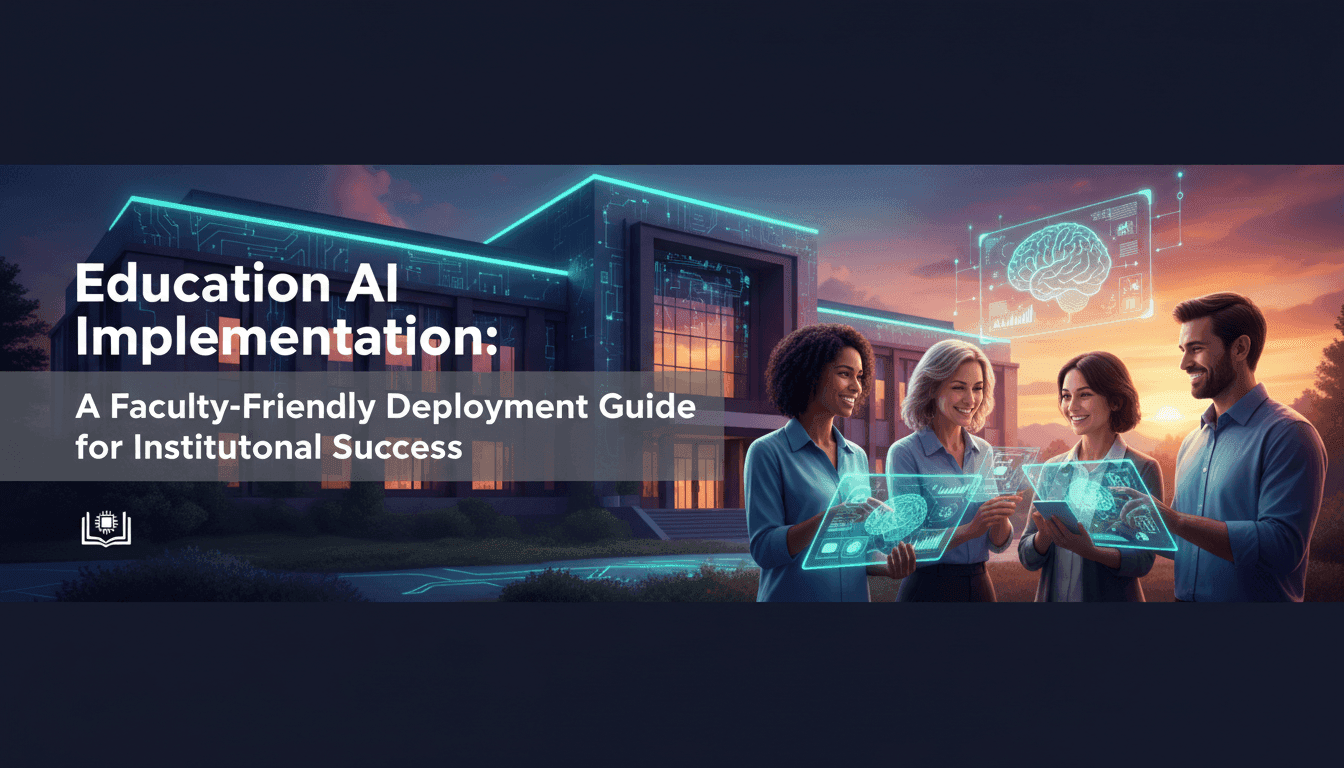
Table Of Contents
- Understanding Faculty Resistance to AI Implementation
- The Faculty-First Framework for AI Deployment
- Building Your AI Implementation Roadmap
- Selecting AI Tools That Faculty Will Actually Use
- Training Strategies That Stick
- Measuring Success Beyond Technology Metrics
- Common Pitfalls and How to Avoid Them
- Creating a Culture of Continuous AI Adoption
The promise of artificial intelligence in education is compelling: personalized learning at scale, automated administrative tasks, intelligent tutoring systems, and data-driven insights that improve student outcomes. Yet despite substantial investments in AI technologies, many educational institutions face a frustrating reality: faculty resistance derails deployment efforts, expensive tools remain underutilized, and the gap between AI potential and classroom reality continues to widen.
The challenge isn't typically the technology itself. It's the human element. Faculty members juggle competing demands, face steep learning curves with new technologies, and harbor legitimate concerns about AI's role in pedagogy. When institutions approach AI implementation as purely a technical project rather than a change management initiative, failure rates soar. According to recent education technology research, nearly 60% of EdTech implementations fail to achieve their intended adoption levels, with faculty buy-in cited as the primary obstacle.
Successful AI deployment in educational settings requires a fundamentally different approach: one that places faculty needs, concerns, and workflows at the center of the implementation strategy. This faculty-friendly framework transforms AI from an imposed disruption into a valued tool that genuinely enhances teaching effectiveness and reduces administrative burden. This guide provides educational leaders, administrators, and institutional decision-makers with a practical roadmap for implementing AI technologies that faculty will embrace, utilize, and champion.
Understanding Faculty Resistance to AI Implementation
Before launching any AI initiative, educational leaders must understand the legitimate concerns driving faculty resistance. These aren't simply obstacles to overcome but valuable signals that should inform your deployment strategy.
Faculty skepticism typically stems from several interconnected sources. Pedagogical autonomy concerns rank highest: educators have spent years developing teaching methodologies that work for their students and disciplines. AI tools that feel prescriptive or that threaten to standardize teaching approaches trigger justified resistance. Additionally, workload anxiety plays a significant role. Faculty members correctly recognize that adopting new technologies requires upfront time investment during already-overloaded semesters. When institutions fail to account for this learning curve or provide adequate support, resistance intensifies.
Technical confidence gaps represent another critical factor. Many faculty members excel in their subject matter expertise but feel less confident with rapidly evolving technologies. This isn't a generational issue—it spans all age groups and career stages. The fear of appearing incompetent in front of students or colleagues creates powerful barriers to adoption. Furthermore, ethical concerns about AI in education resonate deeply with many educators who question algorithmic bias, student data privacy, and the appropriate role of automation in human-centered learning environments.
The most successful institutions acknowledge these concerns as legitimate and design implementation strategies that directly address each dimension. This requires moving beyond superficial change management tactics toward genuine co-creation of AI-enhanced educational environments.
The Faculty-First Framework for AI Deployment
The Faculty-First Framework inverts traditional technology deployment by starting with teaching needs rather than available tools. This approach dramatically increases adoption rates and ensures AI implementations deliver tangible value rather than creating additional complexity.
At its core, this framework operates on three foundational principles. Value-first selection means choosing AI tools that solve genuine pain points faculty actually experience, not problems administrators assume exist. This requires extensive listening sessions, workflow analysis, and direct faculty input before any technology decisions occur. Incremental integration recognizes that sustainable change happens gradually. Rather than wholesale transformation, the framework emphasizes small wins that build confidence and demonstrate value before expanding scope.
Continuous support architecture ensures faculty never feel abandoned during the learning process. This goes far beyond initial training sessions to create ongoing access to technical assistance, peer learning communities, and iterative feedback loops that refine implementations based on real-world classroom experiences.
Implementing this framework requires institutional commitment that extends beyond IT departments. Academic leadership must champion the initiative, allocate appropriate resources for support structures, and create incentives that reward experimentation rather than punishing initial struggles. When Business+AI consulting services work with educational institutions, this holistic approach to change management consistently outperforms technology-centric strategies.
Building Your AI Implementation Roadmap
Successful AI deployment follows a structured yet flexible roadmap that adapts to your institution's unique culture, existing technology infrastructure, and faculty readiness levels. This phased approach balances momentum with sustainability.
Phase 1: Discovery and Stakeholder Alignment
The discovery phase establishes the foundation for everything that follows. Begin by conducting comprehensive needs assessment through faculty focus groups, departmental surveys, and workflow observation sessions. The goal is identifying specific pain points where AI could deliver meaningful impact: repetitive grading tasks, personalized feedback at scale, student engagement tracking, or administrative documentation.
Crucially, this phase must include diverse faculty representation across disciplines, career stages, and technical comfort levels. Your early adopters—the technologically enthusiastic faculty who eagerly try new tools—provide valuable insights but don't represent the broader population you ultimately need to reach. Include skeptics and late adopters in discovery conversations. Their concerns often surface the real barriers you'll need to address.
Stakeholder alignment extends beyond faculty to include IT departments, instructional designers, department chairs, and student representatives. Create a steering committee that brings these perspectives together and establishes shared success metrics. Document current baseline measurements for the metrics you plan to improve, whether that's time spent on administrative tasks, student engagement indicators, or learning outcome assessments.
Phase 2: Pilot Programs and Champion Cultivation
Pilot programs allow controlled experimentation with manageable risk. Select 3-5 faculty volunteers who represent different disciplines and teaching contexts. Provide these pilot participants with enhanced support: dedicated technical assistance, regular check-in meetings, and explicit expectations that they'll provide honest feedback rather than polished success stories.
Choose AI tools for pilots based on three criteria: genuine alignment with identified pain points, intuitive user experience that minimizes learning curves, and vendor responsiveness to educational contexts. Avoid the temptation to pilot multiple competing solutions simultaneously, which fragments your support resources and creates confusion.
During the pilot phase, document both successes and failures with equal attention. What worked well? What created unexpected complications? How did students respond? What additional support did faculty need beyond initial training? These insights directly inform your scaled deployment strategy.
Cultivating faculty champions emerges naturally from successful pilots. These individuals become invaluable peer advocates who can speak authentically about benefits, acknowledge challenges, and provide credible guidance to colleagues. Create formal opportunities for champions to share experiences through faculty development sessions, departmental meetings, and informal networking events. Peer-to-peer learning consistently outperforms top-down directives in educational settings.
Phase 3: Scaled Deployment and Integration
Scaled deployment doesn't mean universal mandates. Instead, it creates pathways for broader adoption while respecting individual readiness and teaching contexts. Offer multiple entry points: department-wide initiatives for units with strong champion presence, optional workshops for individuals ready to explore, and observation opportunities for those still evaluating.
Integration focuses on embedding AI tools into existing workflows rather than creating parallel systems. Work closely with instructional designers to develop discipline-specific use cases, template configurations, and integration guides for learning management systems. The goal is reducing friction, not adding steps to already complex processes.
Maintain robust support structures during scaling: expanded office hours for technical assistance, peer mentoring programs pairing experienced users with newcomers, and rapid response mechanisms for addressing emerging issues. Track adoption metrics but avoid using them punitively. Instead, use data to identify where additional support might help and which implementations are generating the strongest engagement.
Selecting AI Tools That Faculty Will Actually Use
Tool selection makes or breaks faculty-friendly AI implementation. The market overflows with EdTech solutions making ambitious promises, but successful deployment requires rigorous evaluation criteria focused on actual usability rather than feature lists.
User experience quality should dominate your selection process. Faculty and students must find the interface intuitive without extensive training. Request extended trial periods and test tools with representative faculty who weren't involved in the evaluation process. If they struggle during demos, broader adoption will fail regardless of the tool's capabilities. Pay attention to mobile responsiveness, accessibility features, and integration smoothness with your existing technology ecosystem.
Pedagogical flexibility ensures the tool adapts to different teaching philosophies rather than imposing specific approaches. The best AI education tools function as enhancement layers that support diverse instructional methods. Avoid platforms that require fundamental changes to course structure or teaching style. Faculty should maintain pedagogical control while gaining AI-powered assistance.
Data transparency and privacy protection matter deeply to ethically-minded educators. Select vendors who clearly explain how AI algorithms make decisions, what student data gets collected, and how privacy gets protected. Opaque "black box" systems that can't explain their recommendations undermine faculty trust and raise legitimate ethical concerns. Ensure vendor data practices comply with relevant regulations and institutional policies.
Consider vendor stability and support quality beyond immediate functionality. Educational implementations require multi-year commitments. Evaluate vendor financial health, customer retention rates, and responsiveness to support requests. Request references from similar educational institutions and conduct thorough due diligence. The most sophisticated AI capabilities matter little if the vendor disappears or provides inadequate ongoing support.
Training Strategies That Stick
Traditional one-size-fits-all training sessions consistently fail in educational AI deployments. Faculty members need differentiated learning opportunities that respect their varying baseline knowledge, teaching contexts, and learning preferences.
Implement a multi-modal training architecture offering various learning pathways:
- Just-in-time microlearning modules: Short, focused video tutorials addressing specific tasks faculty can access exactly when needed
- Hands-on workshop sessions: Interactive masterclasses where faculty experiment with tools in supported environments
- Discipline-specific cohorts: Subject-area groups exploring AI applications relevant to their particular teaching contexts
- One-on-one consultations: Personalized sessions addressing individual faculty questions and workflow integration
- Peer observation opportunities: Shadowing colleagues who've successfully integrated AI tools into their teaching practice
Timing matters enormously. Avoid scheduling intensive training immediately before semester starts when faculty face competing demands. Instead, offer training during natural transition periods with explicit time for practice before classroom implementation. Provide refresher sessions throughout the academic year as faculty encounter new use cases and questions.
Create low-stakes experimentation spaces where faculty can try AI tools without student-facing consequences. Sandbox environments, test courses, and practice scenarios allow skill-building without performance pressure. Many faculty resist adoption because they fear making mistakes in front of students. Addressing this concern directly through practice environments reduces anxiety and accelerates learning.
Develop comprehensive resource libraries that faculty can reference independently: quick-start guides, troubleshooting FAQs, video walkthroughs, and use case examples. Make these resources searchable and organized by task rather than by feature. Faculty thinking "I want to provide faster feedback on writing assignments" should easily find relevant guidance without understanding the underlying AI mechanisms.
Measuring Success Beyond Technology Metrics
Meaningful AI implementation assessment requires metrics that extend well beyond adoption statistics and usage logs. While tracking how many faculty use which tools provides basic data, it reveals nothing about whether the implementation delivers actual value.
Establish a balanced measurement framework encompassing multiple dimensions:
Faculty experience metrics capture whether AI tools genuinely reduce workload and enhance teaching effectiveness. Survey faculty regularly about time savings, teaching satisfaction changes, and perceived value. Track support ticket volume and resolution times as indirect indicators of tool usability. Conduct qualitative interviews exploring how AI integration has affected teaching practices and professional satisfaction.
Student outcome indicators connect AI implementation to core educational mission. Compare learning outcomes, engagement metrics, course completion rates, and student satisfaction between AI-enhanced and traditional course sections. Control for confounding variables and avoid attributing all changes to AI alone. The goal is understanding whether AI tools contribute positively to student success, not claiming they single-handedly transform education.
Institutional efficiency gains matter to administrators and budget holders. Document time savings from automated processes, improvements in administrative accuracy, and resource reallocation enabled by AI assistance. Quantify these benefits in terms decision-makers understand: full-time-equivalent hours saved, error reduction percentages, or capacity increases for student-facing activities.
Cultural indicators reveal whether AI adoption is becoming sustainable or remains dependent on external pressure. Monitor peer-to-peer knowledge sharing, voluntary exploration of new AI applications, and faculty requests for expanded capabilities. These signals suggest genuine cultural integration rather than compliance-driven adoption.
Share measurement results transparently with all stakeholders, including both successes and areas needing improvement. This openness builds trust and provides evidence-based direction for refinements. The institutions seeing strongest long-term AI integration treat assessment as continuous learning rather than one-time evaluation.
Common Pitfalls and How to Avoid Them
Even well-intentioned AI implementations encounter predictable obstacles. Anticipating these challenges allows proactive mitigation rather than reactive damage control.
Pitfall: Technology-first decision making occurs when institutions select AI tools before understanding actual faculty needs. The result: expensive platforms that solve problems nobody has while ignoring genuine pain points. Avoid this by conducting thorough needs assessment before evaluating any specific technologies and involving faculty in selection processes from the beginning.
Pitfall: Inadequate support infrastructure emerges when institutions underestimate ongoing assistance requirements. Initial training alone never suffices—faculty need continued access to help as they encounter new situations and edge cases. Prevent this by building permanent support structures including dedicated staff, peer mentoring programs, and accessible resource libraries rather than treating support as a temporary launch activity.
Pitfall: Mandated adoption without value demonstration creates resentment and superficial compliance. When administrators require AI tool usage without first proving tangible benefits, faculty implement minimally while harboring resistance. Instead, lead with voluntary pilots that demonstrate clear value, allowing organic expansion through peer influence rather than administrative decree.
Pitfall: Neglecting ethical dimensions surfaces when implementations rush forward without addressing legitimate concerns about algorithmic bias, data privacy, and appropriate AI roles in education. This oversight damages trust and can create genuine harm. Address this proactively by establishing ethical frameworks, creating transparency about AI decision-making, and building ongoing channels for raising and resolving ethical concerns.
Pitfall: Isolation from broader institutional strategy happens when AI initiatives operate as standalone projects disconnected from institutional priorities, strategic plans, and existing improvement efforts. This fragmentation wastes resources and reduces impact. Integrate AI implementation explicitly within broader institutional strategies and connect to existing priorities like student success initiatives, equity goals, or teaching excellence programs.
Creating a Culture of Continuous AI Adoption
Sustainable AI integration extends beyond specific tool implementations to cultivate institutional cultures where faculty view AI as an evolving resource for teaching enhancement rather than a fixed requirement.
Develop learning communities where faculty regularly explore AI applications together. These might be formal faculty learning communities with structured meeting schedules or informal networks organized around shared interests. The key is creating spaces for ongoing experimentation, peer learning, and collective problem-solving. Many institutions find that discipline-specific communities generate particularly valuable insights since they can explore AI applications within specific pedagogical contexts.
Establish recognition systems that celebrate innovation and experimentation, not just successful implementations. When institutions only reward those who immediately master AI tools, they discourage the trial-and-error essential for meaningful learning. Instead, recognize faculty who thoughtfully experiment, share lessons from failures, and contribute to collective understanding. This might include teaching innovation awards, opportunities to present at Business+AI Forums, or internal grants supporting AI experimentation.
Create feedback loops ensuring faculty voices continuously shape AI strategy evolution. Regular town halls, advisory committees, and survey mechanisms allow faculty to influence which tools get adopted, how implementations get refined, and where institutions should focus next. This participatory approach transforms faculty from passive recipients of administrative decisions into active co-creators of AI-enhanced educational environments.
Invest in faculty AI literacy as ongoing professional development priority. This extends beyond specific tool training to broader understanding of AI capabilities, limitations, and societal implications. Faculty equipped with foundational AI knowledge make better decisions about appropriate applications, ethical considerations, and pedagogical integration. Partner with organizations offering comprehensive AI education programs to provide faculty with current knowledge as the field evolves.
Maintain strategic flexibility as AI technologies and educational needs change. Avoid locking into inflexible long-term contracts or becoming overly dependent on single vendors. Regularly reassess your AI tool ecosystem, retire implementations that no longer serve needs, and remain open to emerging solutions that better address faculty and student requirements. The institutions thriving with educational AI treat it as a continuously evolving capability rather than a one-time transformation project.
Faculty-friendly AI implementation in education succeeds not through technological sophistication but through genuine attention to human needs, concerns, and workflows. The institutions achieving meaningful AI adoption have moved beyond treating it as an IT project to embrace it as a comprehensive change management initiative requiring sustained investment, empathetic leadership, and continuous refinement.
The roadmap outlined in this guide—from thorough needs assessment through pilot programs to scaled deployment and cultural integration—provides a practical framework adaptable to diverse institutional contexts. The key lies in maintaining unwavering focus on faculty experience throughout implementation. When educators find AI tools genuinely valuable, intuitively usable, and respectfully integrated into their existing practices, adoption accelerates naturally without requiring mandates or pressure.
As artificial intelligence capabilities continue advancing rapidly, educational institutions face a critical choice: attempt to chase every new development reactively, or build strong foundations for thoughtful, faculty-centered AI integration that can evolve sustainably. The latter approach requires patience, resources, and commitment to treating faculty as partners rather than obstacles. However, it consistently produces implementations that actually get used, deliver measurable value, and contribute meaningfully to institutional missions.
Success ultimately depends on recognizing that educational AI implementation is fundamentally about supporting excellent teaching rather than replacing it. The most powerful AI tools amplify human expertise, free educators from tedious tasks, and create capacity for the high-touch interactions that define transformative education. When institutions keep this human-centered vision at the forefront, AI becomes a genuine asset in pursuing educational excellence rather than another burden in an already complex professional landscape.
Ready to Transform Your AI Implementation Strategy?
Turning AI potential into tangible educational outcomes requires more than good intentions. It demands expert guidance, practical frameworks, and connection to successful implementation strategies.
Join the Business+AI community to access the resources, expertise, and peer network that will accelerate your institution's AI journey. Our membership connects educational leaders with proven deployment strategies, hands-on learning opportunities, and direct access to implementation specialists who understand the unique challenges of faculty-centered AI adoption.
Discover how leading institutions are successfully navigating AI implementation through our comprehensive ecosystem of workshops, consulting services, and collaborative learning experiences. Transform AI talk into measurable educational gains.