
AI Ethics in the Workplace: 7 Dilemmas Leaders Will Face
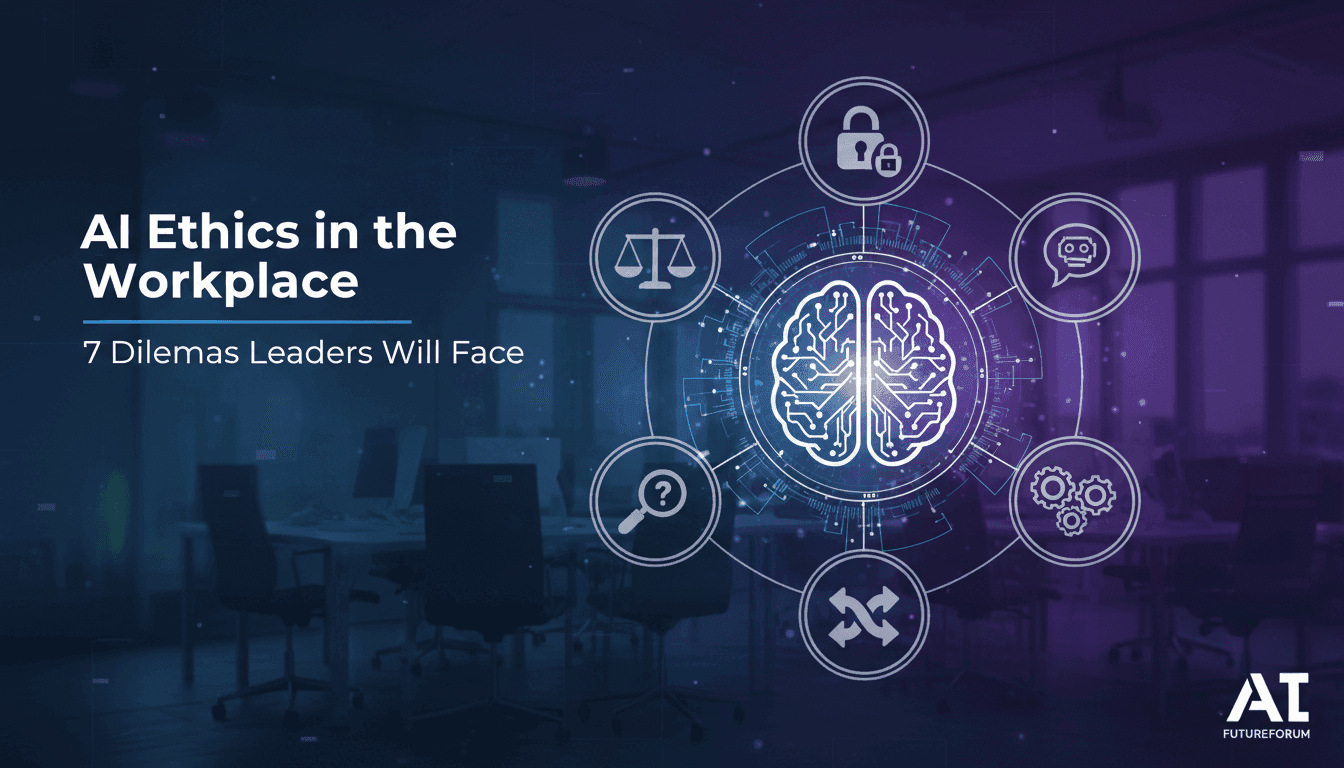
Table Of Contents
- The Rising Importance of AI Ethics in Business
- Dilemma #1: Algorithmic Bias in Hiring and Promotion
- Dilemma #2: Employee Surveillance vs. Privacy Rights
- Dilemma #3: AI-Driven Decisions and Accountability
- Dilemma #4: Job Displacement and Workforce Transformation
- Dilemma #5: Data Ownership and Consent
- Dilemma #6: Transparency vs. Competitive Advantage
- Dilemma #7: AI Explainability and the Black Box Problem
- Building an Ethical AI Framework for Your Organization
The promise of artificial intelligence in business is undeniable. From automating routine tasks to uncovering insights hidden in massive datasets, AI is transforming how organizations operate, compete, and grow. Yet as leaders rush to implement AI solutions, they're discovering that technical capabilities alone don't guarantee successful outcomes. The real challenge lies in navigating the complex ethical terrain that comes with AI adoption.
Business leaders today face unprecedented ethical questions that didn't exist a decade ago. Should your AI hiring tool have access to candidates' social media activity? How do you explain an AI-driven decision to deny a loan or terminate an employee? What happens when your algorithm inadvertently discriminates against certain groups? These aren't hypothetical scenarios. They're real dilemmas playing out in boardrooms across Singapore and beyond.
This article examines seven critical AI ethics dilemmas that leaders must confront as they integrate artificial intelligence into their workplaces. More importantly, it provides practical frameworks to help you address these challenges while maintaining both competitive advantage and organizational integrity. Whether you're just beginning your AI journey or scaling existing implementations, understanding these ethical dimensions is essential for sustainable success.
AI Ethics in the Workplace
7 Critical Dilemmas Leaders Must Navigate
Why AI Ethics Matters Now
Organizations with strong ethical AI practices experience fewer algorithmic failures, higher employee trust, and better customer retention. Ethical considerations must be integrated from the beginning—not bolted on as an afterthought.
The 7 Critical Dilemmas
Algorithmic Bias in Hiring & Promotion
AI systems learn from historical data, often perpetuating existing biases. Regular audits and diverse training data are essential.
Employee Surveillance vs. Privacy Rights
Balancing productivity monitoring with privacy requires clear policies, employee consent, and proportionate data collection.
AI-Driven Decisions & Accountability
Clear accountability structures ensure business leaders retain final authority for decisions affecting employees.
Job Displacement & Workforce Transformation
"Transformation over termination"—invest in reskilling programs that help employees transition to new AI-augmented roles.
Data Ownership & Consent
Employee data requires clear policies on collection, purpose limitation, and explicit consent for any repurposing.
Transparency vs. Competitive Advantage
Stratified transparency allows stakeholder understanding without revealing proprietary AI methods and competitive secrets.
AI Explainability & the Black Box Problem
Balance AI performance with explainability. Sometimes simpler, interpretable models serve better than opaque algorithms.
Building Your Ethical AI Framework
Turn AI Ethics from Concern into Strategic Advantage
Join Singapore's leading AI ecosystem for practical frameworks, expert guidance, and peer insights tailored to your organization.
Join Business+AI TodayThe Rising Importance of AI Ethics in Business
The conversation around AI ethics has evolved dramatically from academic discussion to boardroom priority. Regulatory bodies worldwide are introducing frameworks to govern AI use, with Singapore's Model AI Governance Framework leading the way in Asia-Pacific. Organizations that proactively address ethical considerations aren't just avoiding regulatory penalties. They're building trust with employees, customers, and stakeholders while reducing the risk of costly implementation failures.
The business case for ethical AI is compelling. Research shows that companies with strong ethical AI practices experience fewer instances of algorithmic failure, higher employee trust, and better customer retention. Conversely, organizations that ignore ethical considerations face reputational damage, legal challenges, and failed AI initiatives that destroy value rather than create it.
For executives attending Business+AI forums and workshops, one message consistently emerges: ethical considerations must be integrated into AI strategy from the beginning, not bolted on as an afterthought. The dilemmas outlined below represent the most pressing ethical challenges leaders will encounter as they transform their organizations with AI.
Dilemma #1: Algorithmic Bias in Hiring and Promotion
The Challenge: AI-powered recruitment tools promise to eliminate human bias from hiring decisions by focusing purely on qualifications and fit. The reality is far more complex. These systems learn from historical data, which often reflects existing biases within organizations and society. An AI trained on past hiring decisions at a company with poor diversity may perpetuate or even amplify those patterns.
Consider a multinational corporation that implemented an AI screening tool to handle thousands of applications. After six months, internal audits revealed that the system systematically downranked candidates from certain universities and geographic regions, not because of qualifications but because historical hiring patterns showed fewer successful hires from those backgrounds. The AI had learned to replicate past biases rather than eliminate them.
The Framework: Leaders must implement regular bias audits of AI systems, examining outcomes across different demographic groups. This requires establishing baseline metrics before AI implementation and monitoring for disparate impact. Equally important is diversifying the training data and involving diverse teams in algorithm development. The solution isn't abandoning AI in hiring but building accountability mechanisms that ensure fairness.
Transparency with candidates also matters. Organizations should disclose when AI plays a role in hiring decisions and provide channels for candidates to understand and challenge outcomes. This approach aligns with Singapore's Advisory Guidelines on the Use of Personal Data in AI-Driven Recruitment, which emphasizes accountability and transparency.
Dilemma #2: Employee Surveillance vs. Privacy Rights
The Challenge: AI enables unprecedented monitoring capabilities in the workplace. Systems can track employee keystrokes, analyze email sentiment, monitor video feeds, and even assess productivity patterns in real-time. During the remote work surge, many organizations deployed AI tools to ensure productivity and security. Yet this capability raises fundamental questions about employee privacy and trust.
The dilemma intensifies when surveillance serves legitimate business purposes. AI can detect insider threats, identify burnout before it leads to attrition, and optimize workflows to reduce employee stress. The line between beneficial monitoring and invasive surveillance isn't always clear, and cultural expectations vary significantly across regions.
The Framework: Effective leaders establish clear policies that define what will be monitored, why, and how the data will be used. Employee consent and communication are critical. Workers should understand monitoring practices and have input into policies that affect them. Several forward-thinking organizations have created employee advisory boards specifically to weigh in on AI monitoring practices.
The principle of proportionality matters here. Monitoring should match the legitimate business need and risk level. A bank monitoring for fraud has different requirements than a creative agency. Additionally, aggregate data often serves business purposes better than individual monitoring, protecting privacy while still delivering insights. Leaders attending Business+AI workshops learn to balance these competing interests through structured frameworks and stakeholder engagement.
Dilemma #3: AI-Driven Decisions and Accountability
The Challenge: When AI systems make or significantly influence important decisions affecting employees, who bears responsibility when things go wrong? Traditional accountability structures assume human decision-makers, but AI complicates this chain. If an algorithm recommends terminating an employee based on performance predictions and that decision proves unfair or inaccurate, is the manager responsible? The data science team? The vendor who provided the tool?
This accountability gap creates legal and ethical challenges. Employees facing adverse decisions want someone to answer for those outcomes. Yet in many organizations, no single person fully understands how complex AI systems reach their conclusions. This diffusion of responsibility can leave affected individuals without recourse.
The Framework: Organizations need clear accountability structures that assign responsibility for AI outcomes. This typically involves a governance model where business leaders retain final decision-making authority for significant employee-impacting decisions, even when informed by AI. The technology should augment human judgment, not replace accountability.
Documentation is equally critical. Organizations should maintain records of how AI systems are developed, validated, and deployed. This includes tracking what data is used, how models are trained, and what validation testing occurs. When challenged on AI-driven decisions, leaders must be able to explain the process and demonstrate that appropriate safeguards were in place. The Business+AI consulting team helps organizations establish these governance frameworks tailored to their specific contexts.
Dilemma #4: Job Displacement and Workforce Transformation
The Challenge: Perhaps no AI ethics dilemma generates more anxiety than job displacement. Leaders face a profound moral question: when AI can perform tasks more efficiently than humans, what responsibility does the organization have to affected workers? The traditional business answer focuses on efficiency and competitiveness, but the human impact of workforce reduction extends beyond immediate financial calculations.
This dilemma becomes particularly acute in organizations with long-tenured employees or in communities where the company is a major employer. The decision to implement AI that eliminates roles affects families, communities, and the organization's social license to operate. Yet failing to adopt productivity-enhancing AI can threaten the entire organization's competitiveness and survival.
The Framework: Leading organizations are adopting a "transformation over termination" approach. Rather than viewing AI as a replacement for workers, they're investing in reskilling programs that help employees transition to new roles that work alongside AI. This requires planning AI implementation with workforce development in parallel, not as an afterthought.
Transparency about AI's impact on work is essential. Employees who understand how their roles will evolve can prepare and adapt. Some organizations have committed to redeployment guarantees, promising that workers displaced by automation will be offered training and placement in other roles. While this approach requires investment, it builds the trust necessary for successful AI adoption and maintains organizational knowledge.
The Business+AI masterclass program addresses workforce transformation strategies that align AI implementation with talent development, helping leaders navigate this sensitive transition.
Dilemma #5: Data Ownership and Consent
The Challenge: AI systems thrive on data, and in workplace settings, much of that data comes from employees. Their emails, documents, communication patterns, performance metrics, and even behavioral data become inputs for AI algorithms. This raises difficult questions about who owns this data and what employees must consent to for its use.
The challenge intensifies when data collected for one purpose is repurposed for another. An employee might reasonably expect that data collected to optimize workflow would not be used to make promotion decisions or assess termination risk. Yet the temptation to leverage existing data for new AI applications is strong, particularly when the technical capability exists.
The Framework: Ethical data practices start with clear policies about what data is collected, how it's used, and how long it's retained. Purpose limitation is a key principle. Data collected for specific uses should not be repurposed without explicit consent and clear communication about the new application.
Employee data rights should be clearly defined. This includes rights to access their data, understand how it's used, and in some cases, request deletion. While this mirrors consumer data protection principles, workplace applications require nuanced approaches that balance individual rights with legitimate business needs.
Data minimization also matters. Organizations should collect only the data necessary for specific AI applications, rather than gathering everything possible. This reduces privacy risks and builds trust. Regular data audits help ensure compliance with stated policies and identify opportunities to reduce unnecessary data collection.
Dilemma #6: Transparency vs. Competitive Advantage
The Challenge: Stakeholders increasingly demand transparency about how AI systems work and make decisions. Employees want to understand how algorithms affect their careers. Regulators require documentation of AI decision-making processes. Yet detailed disclosure of AI systems can reveal proprietary methods that provide competitive advantage. This creates tension between transparency obligations and business strategy.
For organizations developing custom AI solutions, this dilemma is particularly acute. The algorithms, training approaches, and data strategies that drive AI effectiveness often represent significant intellectual property. Complete transparency could enable competitors to replicate these advantages. Yet opacity erodes trust and may violate emerging regulatory requirements.
The Framework: The solution lies in stratified transparency appropriate to different stakeholders. Employees affected by AI decisions need sufficient information to understand how decisions are made and whether those processes are fair. This doesn't require revealing proprietary algorithms, but it does mean explaining what factors the AI considers and how those factors are weighted.
External stakeholders, including regulators and customers, require transparency about AI governance, validation processes, and safeguards against bias and error. This governance transparency differs from algorithmic transparency. Organizations can demonstrate robust oversight without revealing competitive secrets.
Independent audits provide another approach. Third-party experts can validate that AI systems operate fairly and as described without requiring public disclosure of proprietary methods. This builds trust while protecting competitive advantage. Organizations working with Business+AI consultants develop transparency strategies that balance these competing interests.
Dilemma #7: AI Explainability and the Black Box Problem
The Challenge: Some of the most powerful AI systems, particularly deep learning models, operate as "black boxes." Even their creators cannot fully explain why they reach specific conclusions. This creates profound challenges in workplace applications where affected individuals deserve explanations for decisions that impact their careers and livelihoods.
When an AI system recommends against promoting an employee or flags them as a flight risk, that individual reasonably expects an explanation. Yet if the AI's decision-making process is fundamentally opaque, what explanation can the organization provide? "The algorithm said so" fails both ethical and legal standards in most jurisdictions.
The Framework: Leaders must balance AI performance with explainability. In some cases, this means choosing less sophisticated but more interpretable models over cutting-edge black box approaches. A decision tree or linear model that stakeholders can understand may serve the organization better than a neural network with marginally better accuracy but no interpretability.
When complex models are necessary, organizations should invest in explainability tools that provide insight into model decisions. Techniques like LIME (Local Interpretable Model-Agnostic Explanations) or SHAP (SHapley Additive exPlanations) can help illuminate why specific decisions were reached, even if the complete model logic remains opaque.
Human oversight provides another safeguard. Rather than fully automating high-stakes decisions, organizations can use AI to inform human decision-makers who remain accountable for outcomes. This hybrid approach preserves the benefits of AI while ensuring that someone can explain and defend important decisions.
Building an Ethical AI Framework for Your Organization
Navigating these seven dilemmas requires more than addressing each challenge in isolation. Organizations need comprehensive frameworks that embed ethical considerations throughout the AI lifecycle, from conception through deployment and monitoring.
Successful frameworks typically include several key elements. First, clear governance structures that assign responsibility for AI ethics at appropriate organizational levels. This often includes an AI ethics board or committee with diverse representation from legal, technical, business, and human resources functions. Second, standardized assessment processes that evaluate AI projects for ethical risks before approval. Third, ongoing monitoring mechanisms that detect ethical issues after deployment. Fourth, clear escalation paths when ethical concerns arise.
Culture matters as much as structure. Organizations where employees feel empowered to raise ethical concerns about AI are more likely to identify and address issues before they become crises. This requires leadership commitment and psychological safety. When executives demonstrate that ethical concerns are valued, not punished, the entire organization becomes more vigilant.
Training and capability building are also essential. Leaders, managers, and technical teams all need education about AI ethics appropriate to their roles. Business leaders don't need to become data scientists, but they should understand ethical risks well enough to ask the right questions. Technical teams should understand not just how to build AI systems but how to build them responsibly.
The Business+AI ecosystem brings together executives, consultants, and solution vendors specifically to address these implementation challenges. Through hands-on workshops and masterclasses, leaders learn to translate ethical principles into practical governance structures that work in their specific contexts.
External partnerships can accelerate this journey. Few organizations have all the expertise needed to navigate AI ethics alone. Engaging with industry peers, academic institutions, and specialized consultants provides access to broader knowledge and tested approaches. Participating in industry working groups and standards development also helps organizations stay ahead of evolving expectations and requirements.
Finally, organizations should recognize that AI ethics is not a one-time exercise but an ongoing commitment. As AI capabilities evolve and applications expand, new ethical challenges will emerge. The frameworks established today must be flexible enough to adapt to tomorrow's dilemmas while maintaining core principles of fairness, transparency, and accountability.
The integration of AI into workplace operations presents leaders with ethical dilemmas that lack easy answers. From algorithmic bias to job displacement, from privacy concerns to explainability challenges, these issues require thoughtful navigation that balances innovation with responsibility. The leaders who will succeed in the AI era are those who recognize that ethical considerations aren't obstacles to AI adoption but essential components of sustainable implementation.
The seven dilemmas outlined in this article represent some of the most pressing ethical challenges leaders face today, but they're not exhaustive. As AI capabilities expand and applications proliferate, new ethical questions will emerge. What remains constant is the need for frameworks that embed ethics throughout the AI lifecycle, cultures that encourage raising concerns, and leadership committed to both innovation and integrity.
For organizations in Singapore and across Asia-Pacific, the opportunity to lead in ethical AI is significant. By addressing these dilemmas proactively, leaders can build AI implementations that create genuine business value while maintaining trust with employees and stakeholders. The alternative, pursuing AI without ethical guardrails, may deliver short-term gains but risks long-term failures that undermine both specific initiatives and broader organizational credibility.
The path forward requires both strategic vision and practical execution. It demands understanding not just what AI can do but what it should do in your specific organizational context. Most importantly, it requires recognizing that the conversation about AI ethics isn't separate from AI strategy but central to it.
Ready to Transform AI Talk into Ethical Business Gains?
Navigating AI ethics requires more than good intentions. It demands practical frameworks, peer insights, and expert guidance tailored to your organization's unique context. Join the Business+AI membership community to connect with executives, consultants, and solution vendors who are successfully addressing these challenges. Access hands-on workshops, exclusive masterclasses, and the collective wisdom of Singapore's leading AI ecosystem. Transform your approach to AI ethics from reactive concern to strategic advantage.