
AI Anxiety at Work: Symptoms, Causes, and Practical Management Strategies
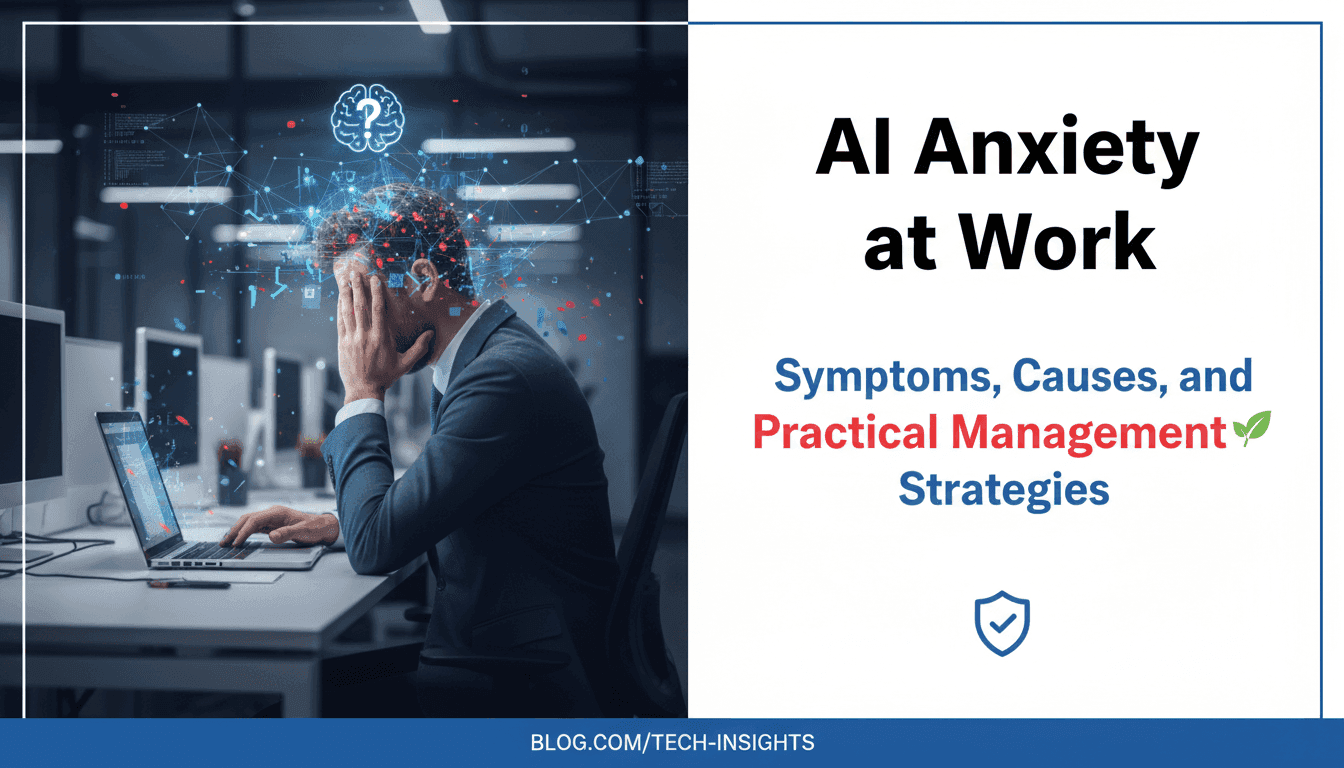
Table Of Contents
- Understanding AI Anxiety in the Modern Workplace
- Common Symptoms of AI Anxiety at Work
- Root Causes of AI Anxiety
- The Business Impact of Unmanaged AI Anxiety
- Effective Management Strategies for Organizations
- Individual Strategies for Managing AI Anxiety
- Building an AI-Ready Culture
- Moving Forward with Confidence
The conference room falls silent when the CEO mentions "AI integration." You can feel the tension ripple through the team. Some employees shift uncomfortably in their seats, others stare at their laptops with furrowed brows, and a few exchange worried glances. This scene plays out in organizations across Singapore and around the world as artificial intelligence transitions from buzzword to business reality.
AI anxiety at work has emerged as one of the most significant workplace challenges of our era. Unlike typical change management concerns, AI anxiety taps into deeper fears about professional identity, job security, and human relevance in an increasingly automated world. Recent studies suggest that up to 60% of workers experience some level of anxiety related to AI implementation in their organizations.
Yet anxiety about AI doesn't have to be a barrier to progress. When properly understood and managed, these concerns can actually become catalysts for more thoughtful, human-centered AI adoption. This article explores the symptoms and causes of AI anxiety in the workplace, and provides practical, evidence-based strategies that both organizations and individuals can use to navigate AI transformation with confidence rather than fear.
AI Anxiety at Work
Understanding, Symptoms & Management Strategies
Of workers experience AI-related anxiety as organizations integrate artificial intelligence
Key Symptoms to Recognize
Cognitive
Persistent worry, decision paralysis, rumination
Emotional
Imposter syndrome, helplessness, irritability
Behavioral
Avoidance, reduced productivity, overcompensation
Root Causes of AI Anxiety
🔒 Job Security Concerns
Fears about job displacement and uncertain timelines for AI-driven workplace changes
📚 Skills Gap Anxiety
Worry about lacking technical knowledge and inability to keep pace with rapid AI development
🎯 Loss of Control
Erosion of professional judgment and decision-making autonomy to opaque AI systems
🏢 Organizational Uncertainty
Vague leadership messaging and lack of clear support structures during AI transitions
Effective Management Strategies
For Organizations:
✓ Transparent communication about AI initiatives
✓ Comprehensive training programs
✓ AI as augmentation not replacement
✓ Clear AI governance policies
For Individuals:
✓ Pursue strategic learning in relevant AI skills
✓ Cultivate growth mindset toward AI fluency
✓ Focus on human skills AI can't replicate
✓ Build professional networks and communities
Transform AI Anxiety into Confidence
The future of work includes AI, but depends fundamentally on human judgment, creativity, empathy, and collaboration
15-20% productivity loss
from unmanaged workplace anxiety
All organizational levels
affected by AI anxiety concerns
Understanding AI Anxiety in the Modern Workplace
AI anxiety at work represents a specific form of technological apprehension that goes beyond general resistance to change. It's characterized by persistent worry, stress, or fear related to how artificial intelligence will affect one's job, career trajectory, or professional value. This anxiety exists on a spectrum, from mild concern about learning new tools to severe distress that affects job performance and wellbeing.
What makes AI anxiety particularly challenging is its abstract nature. Unlike previous technological shifts where workers could clearly see how tools would assist them, AI often operates as a "black box" that makes decisions or generates outputs through processes that feel opaque and unpredictable. This uncertainty fuels anxiety in ways that more transparent technologies do not.
The phenomenon affects workers at all levels. Entry-level employees worry their positions will be automated away before they can build careers. Mid-level professionals fear their accumulated expertise will become obsolete. Even senior executives experience anxiety about making the right strategic decisions regarding AI adoption while maintaining their organization's competitive edge.
Common Symptoms of AI Anxiety at Work
Recognizing AI anxiety is the first step toward addressing it effectively. The symptoms manifest across cognitive, emotional, and behavioral dimensions, often affecting both individual wellbeing and organizational productivity.
Cognitive and Emotional Symptoms
The mental and emotional toll of AI anxiety often appears before any observable behavioral changes:
Persistent worry and rumination dominate thinking patterns. Employees find themselves repeatedly thinking about worst-case scenarios, such as job loss or professional irrelevance, even when evidence doesn't support these fears. These thoughts can intrude during work tasks, making concentration difficult.
Imposter syndrome intensification occurs when workers begin questioning their fundamental competence. Employees who previously felt confident in their abilities suddenly feel inadequate when comparing themselves to AI capabilities. This manifests as thoughts like "if AI can do this in seconds, what value do I really bring?"
Decision paralysis and analysis fatigue emerge when every choice feels weighted with existential significance. Workers spend excessive time evaluating whether learning a particular skill is worthwhile or whether their projects might be automated soon, leading to mental exhaustion.
Emotional volatility including irritability, frustration, or feelings of helplessness becomes more common. Some employees experience anger directed at leadership for implementing AI, while others turn frustration inward, blaming themselves for not adapting quickly enough.
Behavioral and Performance Symptoms
AI anxiety eventually manifests in observable behaviors that affect workplace dynamics:
Avoidance behaviors become prominent as anxious employees resist engaging with AI tools, skip relevant training sessions, or actively avoid projects involving AI components. This creates a self-fulfilling cycle where lack of exposure reinforces fear.
Reduced productivity and engagement show up as missed deadlines, decreased quality of work, or withdrawal from team collaboration. The mental energy consumed by anxiety leaves less capacity for actual work.
Overcompensation patterns drive some employees to work excessive hours, volunteer for every project, or hoard information to prove their indispensability. While this might seem like high performance, it's unsustainable and signals underlying anxiety.
Physical manifestations including sleep disruption, tension headaches, or digestive issues often accompany sustained anxiety. Some employees report difficulty sleeping before meetings about AI implementation or physical tension when using AI tools.
Root Causes of AI Anxiety
Understanding what drives AI anxiety helps organizations and individuals address the actual sources rather than just managing symptoms.
Job Security Concerns
The most obvious trigger for AI anxiety involves fears about job displacement. Unlike previous technological revolutions that primarily affected manual labor, AI's capabilities extend into cognitive work, analytical tasks, and even creative domains. This unprecedented scope means virtually no role feels completely secure.
Media coverage often amplifies these fears with sensational headlines about AI replacing millions of jobs, while nuanced discussions about job transformation receive less attention. Employees absorb these messages and apply them to their own situations, often overestimating displacement risk while underestimating adaptation potential.
The uncertainty timeline exacerbates anxiety. Workers don't know if their roles might change in six months or six years, making it difficult to plan or prepare appropriately. This ambiguity keeps stress levels elevated over extended periods.
Skills Gap and Competency Fears
Many professionals worry they lack the technical knowledge to remain relevant in an AI-driven workplace. This concern isn't entirely unfounded as AI literacy is becoming increasingly valuable, but anxiety often leads to catastrophic thinking that exaggerates the gap.
The pace of AI development contributes to this anxiety. New capabilities emerge monthly, creating a sense that it's impossible to keep up. Employees feel they're running on a treadmill that keeps accelerating, never able to achieve a stable position of competence.
Generational differences sometimes intensify these fears. Workers who built careers before the digital revolution may feel particularly disadvantaged compared to younger colleagues who seem more comfortable with rapid technological change, though research shows AI anxiety actually affects all age groups similarly.
Loss of Control and Autonomy
AI systems often make recommendations or decisions that workers must accept without fully understanding the underlying logic. This erosion of professional judgment and decision-making authority triggers anxiety, particularly among experienced professionals whose expertise has been their primary source of workplace value.
The "deskilling" concern relates to fears that relying on AI will atrophy existing capabilities. Professionals worry they'll become dependent on systems they don't understand, unable to perform their jobs if the technology fails or becomes unavailable.
Autonomy loss also manifests as increased surveillance anxiety. AI systems that monitor productivity, analyze communication patterns, or track behavior create feelings of being constantly evaluated, reducing psychological safety and increasing stress.
Organizational Uncertainty
Vague or inconsistent messaging from leadership about AI strategy creates fertile ground for anxiety. When employees don't understand why AI is being implemented, how decisions are made, or what the end goal is, they fill information gaps with worst-case assumptions.
Lack of support structures compounds this uncertainty. Organizations that deploy AI tools without adequate training, clear policies, or accessible support leave employees feeling abandoned during the transition.
Inconsistent implementation across departments creates additional confusion and anxiety. When some teams embrace AI while others resist, or when different standards apply to different groups, employees struggle to understand expectations and plan their responses appropriately.
The Business Impact of Unmanaged AI Anxiety
Organizations that dismiss or ignore AI anxiety as an inevitable discomfort of progress miss significant business implications. Unaddressed anxiety creates measurable costs that undermine the very benefits AI is supposed to deliver.
Productivity suffers when anxious employees spend cognitive resources on worry rather than work. Studies indicate that workplace anxiety can reduce productivity by 15-20%, effectively negating efficiency gains from AI implementation.
Talent retention becomes challenging when anxiety drives valuable employees to seek positions at organizations perceived as more stable or human-centered. The cost of replacing skilled workers often exceeds any short-term savings from AI automation.
Innovation and adaptation slow considerably when anxiety promotes risk-averse cultures. Employees become reluctant to experiment, share ideas, or collaborate on AI-related initiatives, creating resistance that delays implementation and reduces effectiveness.
Reputation and employer branding suffer when word spreads about poor change management. In Singapore's tight talent market, organizations known for anxiety-inducing AI implementations struggle to attract top candidates.
Effective Management Strategies for Organizations
Organizations that successfully navigate AI transformation treat anxiety management as a strategic priority, not an HR afterthought. Evidence-based approaches focus on transparency, education, and human-centered implementation.
Create Transparent Communication Channels
Establish regular, honest communication about AI initiatives, including both opportunities and challenges. Leadership should acknowledge concerns directly rather than offering platitudes about "exciting opportunities" that feel dismissive.
Create forums where employees can ask questions and receive substantive answers. This might include town halls, anonymous question submissions, or dedicated AI strategy sessions. The goal is reducing uncertainty by providing clear, consistent information.
Share decision-making frameworks that explain how and why particular AI implementations are chosen. When employees understand the logic behind decisions, even if they disagree, anxiety decreases because the process feels rational and considered rather than arbitrary.
Communicate the human role explicitly in any AI implementation. Specify what tasks AI will handle and what responsibilities remain with human workers, providing concrete rather than abstract descriptions of future workflows.
Invest in Skills Development and Training
Develop comprehensive training programs that build AI literacy across the organization. Effective training goes beyond tool tutorials to include conceptual understanding of how AI works, its limitations, and its appropriate applications.
Offer differentiated learning paths that match various roles and skill levels. Not everyone needs to become a data scientist, but everyone benefits from understanding AI basics relevant to their work. Workshops that provide hands-on experience reduce anxiety more effectively than passive learning.
Provide ongoing learning opportunities rather than one-time training. As AI capabilities evolve, continuous education demonstrates organizational commitment to employee development while building confidence that workers can adapt to future changes.
Celebrate learning milestones and skill acquisition to create positive associations with AI development. Recognition programs that highlight employees who successfully integrate AI into their workflows provide both motivation and concrete examples of successful adaptation.
Reframe AI as Augmentation, Not Replacement
Position AI as a tool that enhances human capabilities rather than replaces them. Share specific examples of how AI handles routine tasks so employees can focus on higher-value activities that require judgment, creativity, or interpersonal skills.
Highlight uniquely human competencies that AI cannot replicate, such as emotional intelligence, ethical reasoning, contextual judgment, and relationship building. Help employees recognize their irreplaceable value while acknowledging that some tasks will change.
Create hybrid roles that deliberately combine AI capabilities with human oversight and decision-making. These positions demonstrate practically how augmentation works and provide templates for how other roles might evolve.
Share success stories from within the organization where AI augmentation has improved both business outcomes and employee satisfaction. Real examples from colleagues are more credible than external case studies.
Establish Clear AI Governance
Develop and communicate explicit policies about AI use, including ethical guidelines, decision rights, and accountability structures. Employees need to know that AI implementation follows principled frameworks rather than chasing every trendy application.
Involve employees in AI governance through representation on committees or working groups. Participation reduces anxiety by providing agency and ensuring diverse perspectives shape implementation decisions.
Create feedback mechanisms where employees can report concerns, suggest improvements, or flag problematic AI applications. Responsive systems that act on feedback demonstrate that human input remains valued and influential.
Establish clear escalation paths when AI decisions need human review or intervention. Knowing that ultimate authority rests with people rather than algorithms provides psychological safety.
Individual Strategies for Managing AI Anxiety
While organizational support is crucial, individuals can also take proactive steps to manage their AI anxiety and build confidence during technological transition.
Pursue strategic learning by identifying specific AI-related skills relevant to your role and industry. Focus on practical competencies rather than trying to master everything. Masterclass programs that offer hands-on AI training provide structured paths for skill development without overwhelming learners.
Cultivate a growth mindset that views AI fluency as learnable rather than innate. Research consistently shows that believing abilities can develop through effort reduces anxiety and improves actual learning outcomes. Treat initial struggles with AI tools as normal parts of the learning process rather than evidence of inadequacy.
Focus on distinctly human skills including emotional intelligence, creative problem-solving, ethical reasoning, and relationship building. Developing these capabilities provides both practical career value and psychological confidence that your contribution extends beyond tasks AI might automate.
Seek accurate information from credible sources rather than catastrophic headlines. Understanding AI's actual capabilities and limitations, including its significant shortcomings, provides a more balanced perspective than media narratives focused on either utopian or dystopian extremes.
Build your professional network through communities focused on AI in your industry. Forums and professional communities where practitioners discuss real implementations provide both learning opportunities and social support from others navigating similar transitions.
Practice self-compassion during the adaptation process. Anxiety about change is normal and doesn't indicate weakness or inadequacy. Acknowledge feelings without judgment while taking constructive action to address underlying concerns.
Set boundaries with anxiety by designating specific times to engage with AI-related concerns rather than letting worry permeate all working hours. Scheduled "worry time" sounds counterintuitive but actually reduces intrusive anxious thoughts by containing them.
Building an AI-Ready Culture
Organizations that successfully minimize AI anxiety don't just manage symptoms; they cultivate cultures where technological adaptation feels safe, supported, and collaborative.
Psychological safety forms the foundation of AI-ready cultures. When employees trust they won't be penalized for asking questions, admitting confusion, or making mistakes while learning, anxiety decreases and adaptation accelerates. Leaders model this safety by acknowledging their own learning curves and uncertainties.
Collaboration over competition reduces anxiety by framing AI adoption as a collective journey rather than a survival-of-the-fittest scenario. Team-based learning, peer mentoring, and shared problem-solving create supportive environments where employees help each other adapt.
Purpose connection helps employees see beyond immediate disruption to meaningful long-term goals. When people understand how AI serves organizational mission and customer value, rather than just efficiency metrics, they're more likely to engage positively with the change.
Flexibility and experimentation normalize the reality that AI implementation involves trial, error, and adjustment. Cultures that expect perfection from the start create anxiety, while those that build in space for learning and iteration reduce pressure.
Consulting support can help organizations design and implement these cultural shifts strategically, ensuring that AI adoption aligns with both business objectives and human wellbeing.
Moving Forward with Confidence
AI anxiety at work represents a natural human response to significant change, not a character flaw or organizational failure. The symptoms, ranging from persistent worry to avoidance behaviors, signal that the transformation we're experiencing is profound and warrants serious attention.
The causes of this anxiety are multiple: job security concerns, skills gaps, loss of autonomy, and organizational uncertainty all contribute to the stress many workers feel. Recognizing these root causes allows for targeted interventions rather than generic reassurances.
Effective management requires coordinated effort at both organizational and individual levels. Companies must prioritize transparent communication, comprehensive training, human-centered implementation, and clear governance. Individuals benefit from strategic learning, growth mindsets, and focus on uniquely human capabilities.
The organizations that will thrive in the AI era aren't necessarily those that adopt technology fastest, but those that bring their people along most effectively. By acknowledging AI anxiety as a legitimate concern deserving thoughtful response, leaders create space for honest dialogue and genuine support.
The goal isn't eliminating all discomfort with change; some uncertainty is inevitable during major transitions. Rather, the objective is ensuring that anxiety remains at productive rather than paralyzing levels, and that it's accompanied by adequate resources, support, and frameworks for successful adaptation.
AI represents a powerful set of tools that can enhance human capabilities, improve decision-making, and free us from repetitive tasks. Realizing this potential requires not just technological implementation but psychological and social support that helps workers navigate the transformation confidently. When we address both the technical and human dimensions of AI adoption, we create foundations for sustainable success that benefits organizations and employees alike.
The rise of AI in the workplace presents both unprecedented opportunities and understandable anxieties. By recognizing the symptoms of AI anxiety, understanding its root causes, and implementing evidence-based management strategies, organizations can transform what might feel like an existential threat into a genuine opportunity for growth and innovation.
The path forward requires honest acknowledgment that this transition is challenging, combined with committed action to provide the transparency, education, and support that employees need. It demands that we see AI not as a replacement for human workers but as a tool that, properly implemented, can augment human capabilities and elevate the nature of work.
For individuals experiencing AI anxiety, remember that these feelings are valid and widely shared. The skills and strategies outlined here, from pursuing targeted learning to cultivating growth mindsets, provide concrete steps you can take to build confidence and competence in an AI-augmented workplace.
The future of work will undoubtedly include AI, but it will also continue to depend fundamentally on human judgment, creativity, empathy, and collaboration. By managing AI anxiety effectively, we create space for both technological progress and human flourishing.
Navigate AI Transformation with Confidence
You don't have to face AI anxiety alone. Join the Business+AI membership community to access hands-on workshops, expert guidance, and a network of professionals successfully navigating AI transformation. Turn your AI concerns into actionable strategies and tangible business gains.