
AI Agents in Automotive: Transforming Dealerships and After-Sales Operations
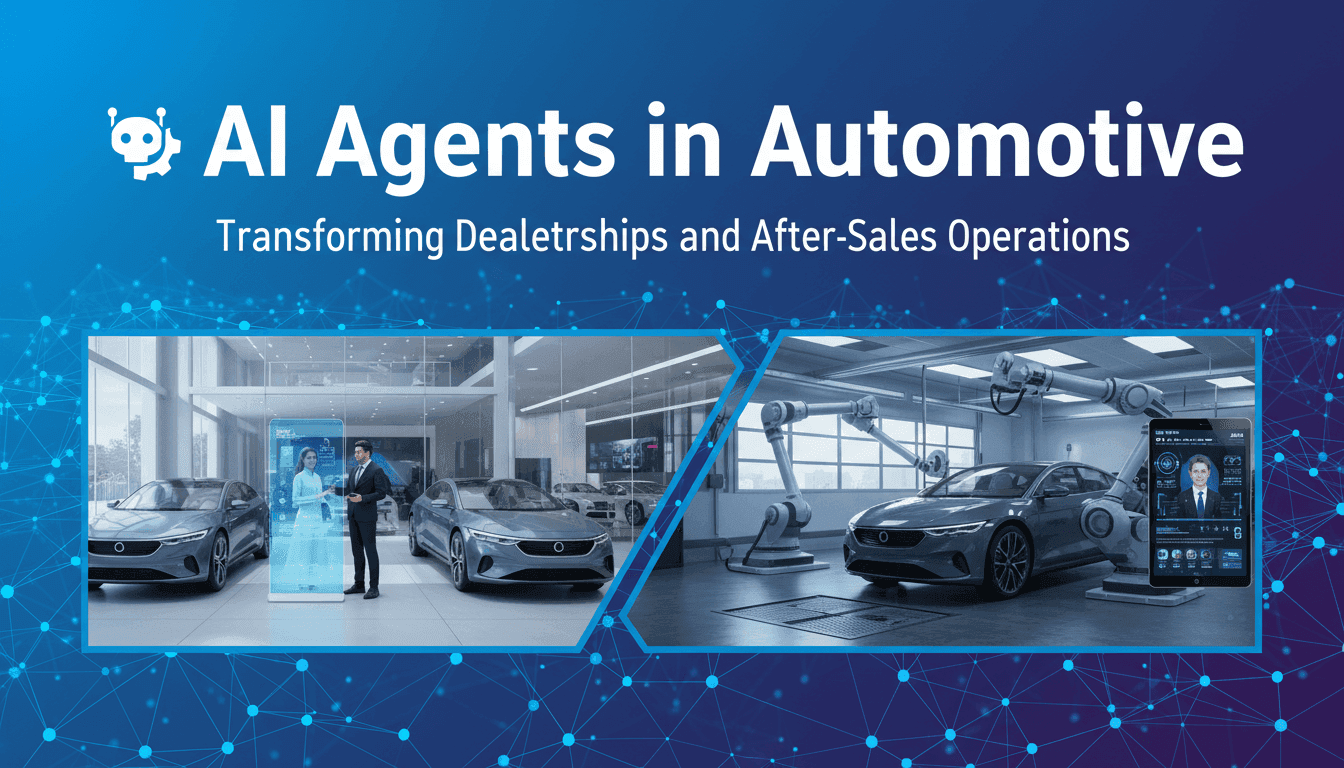
Table Of Contents
- The AI Revolution Reshaping Automotive Retail
- AI Agents in Dealership Operations
- Transforming the Customer Journey with AI
- AI Agents in After-Sales and Service
- Building Customer Loyalty Through AI
- Implementation Challenges and Best Practices
- The Future of AI-Powered Automotive Retail
The automotive industry stands at a pivotal intersection of digital transformation and customer experience evolution. As consumers increasingly expect Amazon-like convenience and personalization, dealerships and automotive brands face mounting pressure to modernize operations while maintaining the human touch that defines successful vehicle sales and service relationships. AI agents, sophisticated software systems capable of autonomous decision-making and learning from interactions, are emerging as the solution to this complex challenge.
From the moment a potential customer begins researching vehicles online to the years of after-sales service that follow, AI agents are revolutionizing every touchpoint in the automotive lifecycle. These intelligent systems handle everything from qualifying leads and scheduling test drives to predicting when a vehicle needs maintenance and optimizing parts inventory. The result is a transformation that delivers measurable business gains: higher conversion rates, improved customer satisfaction scores, reduced operational costs, and increased lifetime customer value.
For automotive executives and dealership leaders, understanding how to deploy AI agents effectively is no longer optional. It's a competitive necessity. This comprehensive guide explores the practical applications of AI agents across dealership operations and after-sales service, providing actionable insights for turning artificial intelligence from industry buzzword into tangible business advantage.
The AI Revolution Reshaping Automotive Retail
The automotive retail landscape has undergone more change in the past five years than in the previous fifty. Digital-first consumers now complete 95% of their vehicle research online before ever visiting a dealership, according to industry data. Meanwhile, profit margins on new vehicle sales continue to compress, forcing dealers to optimize every interaction and maximize revenue from service and parts operations. Traditional approaches to customer engagement, sales processes, and service scheduling simply cannot keep pace with these market dynamics.
AI agents address these challenges by operating continuously across digital and physical channels, processing vast amounts of customer data to deliver personalized experiences at scale. Unlike basic chatbots or rule-based automation, modern AI agents leverage machine learning, natural language processing, and predictive analytics to understand context, learn from interactions, and make intelligent decisions without constant human oversight. They function as tireless team members who handle routine tasks while escalating complex situations to human experts.
The business case for AI agents in automotive is compelling. Dealerships implementing comprehensive AI strategies report 30-40% increases in lead conversion rates, 25% reductions in customer acquisition costs, and 20% improvements in service department efficiency. Perhaps more importantly, these technologies enable smaller dealership groups to compete effectively against larger competitors by amplifying their human teams' capabilities without proportional increases in headcount.
AI Agents in Dealership Operations
Intelligent Lead Management and Customer Acquisition
The journey from anonymous website visitor to qualified lead represents one of the highest-value applications of AI agents in automotive retail. Modern AI-powered lead management systems monitor customer behavior across multiple touchpoints including website visits, social media interactions, email engagement, and third-party automotive platforms. These agents analyze patterns to determine purchase intent, preferred vehicle types, likely budget ranges, and optimal contact timing.
When a potential customer submits an inquiry at 11 PM on a Saturday night, an AI agent immediately responds with personalized information based on the specific vehicles they've viewed and their browsing history. The system might offer to schedule a test drive, provide trade-in valuation estimates, or share relevant financing options. This instant, contextually relevant response dramatically improves conversion rates compared to the traditional approach of having a salesperson return the call on Monday morning when the customer's enthusiasm has cooled.
AI agents also excel at lead scoring and prioritization, helping sales teams focus their energy on the most promising opportunities. By analyzing hundreds of variables including engagement frequency, vehicle configuration activity, competitive shopping behavior, and demographic factors, these systems identify which leads warrant immediate attention versus those requiring further nurturing. One major dealership group reported that AI-powered lead scoring increased their sales team's close rate by 35% while reducing time wasted on unqualified inquiries.
Virtual Showroom Assistants
Virtual showroom assistants represent the evolution of customer service for the digital age. These AI agents guide customers through online vehicle exploration with sophisticated natural language capabilities that understand conversational queries like "I need a family-friendly SUV with good fuel economy under $40,000" or "Show me trucks that can tow at least 8,000 pounds." The agent then presents relevant options, explains key features and differences, and answers follow-up questions with the knowledge depth of an experienced product specialist.
What distinguishes advanced virtual assistants from basic chatbots is their ability to learn customer preferences through conversation and adapt recommendations accordingly. If a customer consistently asks about technology features but never mentions off-road capability, the agent adjusts its presentation to emphasize infotainment systems, driver assistance technologies, and connectivity features. This dynamic personalization creates an engaging experience that keeps customers on dealership websites longer and increases their likelihood of scheduling in-person visits.
Several automotive manufacturers and dealer groups have deployed AI-powered solutions that integrate virtual assistants with augmented reality, allowing customers to visualize vehicles in their own driveways or explore interior features through interactive 3D models. These immersive experiences, guided by AI agents that explain and demonstrate features, bridge the gap between online research and physical showroom visits.
Automated Sales Process Optimization
Behind the customer-facing applications, AI agents are transforming internal dealership operations by optimizing inventory management, pricing strategies, and sales workflows. Intelligent inventory agents analyze local market demand patterns, competitor pricing, vehicle aging on lots, and seasonal trends to recommend optimal stock mix. These systems can predict which vehicle configurations will sell fastest in specific markets, helping dealers avoid excess inventory carrying costs while ensuring popular models remain available.
Pricing optimization agents continuously monitor market conditions and adjust vehicle pricing strategies to maximize both sales velocity and profit margins. Rather than relying on manual pricing decisions or simple cost-plus formulas, these AI systems consider dozens of factors including local competitive pricing, similar vehicle sales rates, customer demographic data, and even weather patterns that influence buying behavior. One dealership network implementing AI-powered pricing optimization reported a 4% increase in gross profit per vehicle while simultaneously reducing average days to sale.
Sales workflow automation represents another high-impact application. AI agents track each deal's progress through the pipeline, identify bottlenecks, and prompt sales managers when deals require intervention. These systems can automatically generate purchase agreements, coordinate with finance departments, schedule vehicle preparation, and trigger appropriate follow-up communications at each stage. This orchestration ensures nothing falls through the cracks while allowing salespeople to focus on relationship-building rather than administrative tasks.
Transforming the Customer Journey with AI
Personalized Vehicle Recommendations
Personalization has become the cornerstone of effective automotive marketing, and AI agents excel at delivering individualized experiences at scale. By integrating data from multiple sources including browsing behavior, previous vehicle ownership, lifestyle indicators derived from social media, and stated preferences, recommendation engines present each customer with a curated selection of vehicles matching their unique needs and desires.
These systems go beyond simple filtering based on price range and body style. Advanced AI agents consider subtle factors like family composition changes inferred from customer data, commute patterns that suggest fuel efficiency priorities, or hobby interests that indicate specific feature requirements. A customer who recently searched for ski resorts might receive recommendations emphasizing all-wheel drive and roof rack capacity, while someone frequently visiting youth sports websites sees vehicles with three-row seating and entertainment systems highlighted.
The business impact of personalized recommendations is substantial. Automotive retailers using AI-powered personalization report 50-70% higher engagement rates with marketing communications and 25-35% improvements in test drive conversion rates. Customers feel understood rather than subjected to generic sales pitches, creating stronger emotional connections with both the vehicles and the dealership brand.
Dynamic Pricing and Negotiation Agents
Vehicle pricing and negotiation have traditionally been opaque processes that frustrate customers and create inefficiencies for dealers. AI agents are introducing transparency and efficiency to this critical interaction. Dynamic pricing systems provide real-time, personalized price quotes based on the customer's specific situation, current inventory levels, manufacturer incentives, and competitive market conditions. Rather than the traditional back-and-forth negotiation, customers receive fair, data-driven pricing that reflects actual market value.
Some forward-thinking dealers are deploying AI negotiation agents that handle price discussions within defined parameters set by management. These systems analyze the customer's purchase readiness, trade-in value, financing needs, and profit margin requirements to find optimal deal structures that satisfy both parties. The AI agent can instantly evaluate different scenarios: lower vehicle price with higher financing rate, increased trade-in allowance with reduced discounts, or value-added service packages that protect margins while meeting customer budget constraints.
This approach benefits both customers and dealers. Buyers appreciate the efficiency and fairness of data-driven pricing without the stress of traditional negotiation. Dealers reduce the time required to close deals, improve consistency in pricing decisions across their sales team, and optimize the balance between sales volume and profitability. Early adopters report that AI-assisted pricing and negotiation reduces the sales cycle by 30-40% while maintaining or improving per-unit profitability.
Financing and Documentation Automation
The financing and paperwork phase represents a critical moment in the vehicle purchase journey where deals can still fall apart due to complexity, confusion, or excessive time requirements. AI agents streamline this process through intelligent document preparation, automated credit analysis, and personalized financing option presentation. When a customer indicates purchase intent, the AI system can pre-populate documentation using information already collected, dramatically reducing redundant data entry and errors.
Intelligent financing agents analyze the customer's credit profile and match them with optimal lending sources and terms from the dealership's network of financial partners. Rather than presenting generic options, these systems explain trade-offs between different financing structures in plain language tailored to each customer's financial literacy level. The agent might illustrate how a slightly longer loan term affects monthly payments and total interest paid, or explain the break-even point for purchasing versus leasing based on the customer's expected usage patterns.
Compliance represents another crucial benefit of AI-powered documentation systems. These agents ensure all required disclosures are properly presented, regulatory requirements are met, and documentation is complete before finalizing transactions. This reduces dealership exposure to compliance violations while creating audit trails that demonstrate proper procedures were followed. Workshops focused on AI implementation help automotive organizations develop these systems with appropriate safeguards and human oversight.
AI Agents in After-Sales and Service
Predictive Maintenance and Service Scheduling
The after-sales service department represents a critical profit center for dealerships, often generating margins significantly higher than new vehicle sales. AI agents are transforming service operations by shifting from reactive repair to predictive maintenance models. By analyzing data from connected vehicles, service history patterns, and component failure rates across vehicle populations, predictive maintenance agents identify potential issues before they cause breakdowns or major repairs.
These systems automatically alert vehicle owners when service is recommended, explaining the issue in understandable terms and offering convenient scheduling options. A customer might receive a notification that their vehicle's battery is showing early signs of degradation and will likely need replacement within the next 2-3 months, along with available appointment times and pricing. This proactive approach increases customer satisfaction by preventing inconvenient breakdowns while improving service department utilization by enabling better capacity planning.
Predictive maintenance also creates significant value through improved customer retention and lifetime value. When customers trust their dealership to keep them informed about vehicle health and recommend appropriate service, they're far more likely to return for both routine maintenance and major repairs rather than seeking service from independent shops. Dealerships implementing comprehensive predictive maintenance programs report 40-50% increases in service retention rates and 20-30% growth in service revenue per vehicle.
Intelligent Parts Inventory Management
Parts inventory represents a substantial capital investment for dealerships, and optimizing this inventory directly impacts profitability. AI agents analyze service scheduling data, predictive maintenance forecasts, seasonal patterns, and vehicle population demographics in the dealership's service area to optimize parts stocking levels. These systems ensure high-turnover parts are always available while minimizing capital tied up in slow-moving inventory.
When a service advisor schedules an appointment, the AI inventory agent immediately checks parts availability and, if necessary, initiates procurement from regional distribution centers or other dealerships in the network. This coordination ensures parts are ready when the vehicle arrives, reducing service completion times and minimizing customer inconvenience. Advanced systems even predict which parts will be needed based on vehicle symptoms described during appointment scheduling, enabling proactive procurement before diagnosis is confirmed.
The financial impact of intelligent parts inventory management is substantial. Dealerships report 15-25% reductions in parts inventory carrying costs while simultaneously improving parts availability rates to above 95%. This combination of reduced working capital requirements and higher customer satisfaction delivers immediate bottom-line benefits that help justify broader AI investments.
Service Department Optimization
Beyond inventory management, AI agents optimize numerous aspects of service department operations. Intelligent scheduling systems balance technician capacity, job complexity, parts availability, and customer preferences to maximize throughput while meeting promised completion times. These agents understand that certain technicians excel at specific repair types and route work accordingly, improving both efficiency and quality.
Real-time workflow optimization represents another powerful application. As vehicles are diagnosed and additional repairs are identified, AI agents dynamically adjust the schedule to accommodate extended service times, alert customers to timeline changes, and reschedule subsequent appointments as needed. The system might identify opportunities to consolidate work when parts for one vehicle are delayed, reassigning technicians to other jobs to maintain productivity.
Customer communication agents keep vehicle owners informed throughout the service process with automated updates via their preferred channels. These systems send notifications when vehicles arrive at the dealership, when diagnosis is complete, when additional repairs are recommended with photo documentation of issues, and when vehicles are ready for pickup. This continuous communication significantly improves customer satisfaction scores while reducing phone calls and administrative burden on service advisors.
Building Customer Loyalty Through AI
The automotive customer lifecycle extends far beyond the initial vehicle purchase, and AI agents excel at nurturing long-term relationships that drive repeat business and referrals. Loyalty program agents track customer interactions across sales and service touchpoints, identifying opportunities to deliver personalized value. These systems might recognize when a customer is approaching the typical trade-in cycle and proactively share information about new models that match their preferences, or notice declining service visit frequency and reach out with special maintenance offers.
Sentiment analysis agents monitor customer feedback from surveys, social media mentions, and review sites to identify satisfaction issues before they escalate. When negative sentiment is detected, the system immediately alerts management and can automatically initiate recovery efforts like follow-up calls from service managers or goodwill gestures. This rapid response to customer concerns often transforms potentially negative experiences into demonstrations of dealership commitment to customer satisfaction.
Referral program automation represents another high-value application. AI agents identify satisfied customers who are likely to provide referrals based on their engagement history and satisfaction scores, then prompt them with personalized referral requests and incentives. The system tracks referral program performance, tests different incentive structures, and optimizes outreach timing to maximize program effectiveness. Dealerships using AI-powered referral programs report 2-3x higher referral rates compared to traditional manual approaches.
Implementation Challenges and Best Practices
While the potential benefits of AI agents in automotive retail are substantial, successful implementation requires careful planning and execution. Data infrastructure represents the foundation for effective AI systems. Dealerships must consolidate customer data from disparate systems including CRM platforms, dealer management systems, website analytics, and service records into unified customer profiles that AI agents can access and analyze. This data integration often represents the most significant technical challenge but is essential for delivering personalized experiences.
Change management and staff training are equally critical success factors. Sales and service personnel may initially view AI agents as threats to their roles rather than tools that enhance their capabilities. Effective implementations emphasize how AI handles routine tasks and administrative work, freeing team members to focus on high-value activities that leverage their human judgment and relationship skills. Organizations that invest in comprehensive training and clearly communicate the complementary nature of human and AI capabilities achieve significantly higher adoption rates and ROI.
Privacy and data security considerations require careful attention, particularly as AI agents process sensitive customer financial information and personal data. Automotive organizations must implement robust data governance frameworks, ensure compliance with regulations like GDPR and CCPA, and maintain transparency with customers about how their data is used. Building customer trust through responsible data practices is essential for long-term AI strategy success. Business+AI's consulting services help organizations navigate these complex considerations while developing comprehensive AI implementation roadmaps.
Starting with focused pilot projects rather than attempting comprehensive transformation allows organizations to learn, demonstrate value, and build momentum. High-impact, relatively contained applications like AI-powered lead response or service appointment scheduling provide opportunities to prove ROI and develop organizational capabilities before expanding to more complex use cases. Successful pilot projects create internal champions who drive broader adoption across the organization.
The Future of AI-Powered Automotive Retail
The trajectory of AI development suggests even more transformative applications on the horizon. Generative AI is enabling increasingly sophisticated conversational agents that can conduct natural, nuanced discussions about complex topics like vehicle financing structures or maintenance recommendations. These systems will blur the line between human and AI interactions, potentially handling complete sales or service transactions without human involvement for customers who prefer self-service experiences.
Integration between manufacturer and dealer AI systems promises to create seamless experiences spanning the entire customer lifecycle. A customer's vehicle might detect a potential issue, automatically schedule service at their preferred dealer, notify the customer with available appointment times, and have the necessary parts pre-ordered—all without human intervention until the customer arrives for service. This level of orchestration will set new expectations for convenience and responsiveness.
The convergence of AI agents with other emerging technologies like augmented reality, blockchain for vehicle history verification, and advanced telematics creates opportunities for entirely new business models. Subscription-based vehicle services, usage-based insurance integrated with dealership offerings, and predictive trade-in programs that automatically match customers with appropriate replacement vehicles all become feasible with sophisticated AI orchestration.
For automotive executives, the strategic imperative is clear: organizations that effectively deploy AI agents across their operations will enjoy substantial competitive advantages in customer acquisition, retention, and operational efficiency. Those that delay AI adoption risk becoming increasingly uncompetitive as customer expectations rise and margins compress. The question is no longer whether to implement AI in automotive retail, but how quickly and effectively organizations can execute their AI transformation strategies.
Developing organizational AI capabilities requires ongoing learning and adaptation as technologies and best practices evolve. Business+AI's forums and masterclasses provide automotive executives with opportunities to learn from peers who have successfully implemented AI solutions, connect with solution vendors specializing in automotive applications, and stay current with emerging trends that will shape the industry's future.
AI agents are fundamentally reshaping automotive retail from dealership operations through after-sales service, delivering measurable improvements in customer experience, operational efficiency, and profitability. The technology has matured beyond theoretical possibilities to practical applications generating tangible business gains for forward-thinking dealers and manufacturers. From intelligent lead management and personalized vehicle recommendations to predictive maintenance and dynamic inventory optimization, AI agents augment human capabilities while automating routine tasks that previously consumed valuable time and resources.
The automotive organizations achieving the greatest success with AI share common characteristics: they view AI as a strategic imperative rather than an experimental technology, they invest in the data infrastructure necessary to power intelligent systems, they prioritize change management to ensure staff embrace rather than resist AI tools, and they adopt iterative implementation approaches that build momentum through demonstrated successes. These organizations recognize that AI transformation is a journey requiring sustained commitment rather than a one-time technology deployment.
For automotive executives evaluating AI investments, the business case has never been clearer. The combination of compressed margins, evolving customer expectations, and proven AI capabilities creates a compelling imperative for action. Organizations that move decisively to implement AI agents across their customer lifecycle will establish competitive advantages that become increasingly difficult for laggards to overcome. The future of automotive retail belongs to those who successfully blend human expertise with AI capabilities to deliver exceptional experiences at every touchpoint.
Transform Your Automotive Business with AI
Ready to turn AI possibilities into tangible business gains for your automotive organization? Business+AI connects automotive executives with the expertise, solutions, and peer insights needed to successfully implement AI strategies that drive measurable results.
Explore Business+AI Membership to access exclusive workshops, masterclasses, and networking opportunities with automotive leaders who are successfully deploying AI agents across their operations. Join Singapore's premier ecosystem for executives committed to practical AI implementation that delivers real business value.